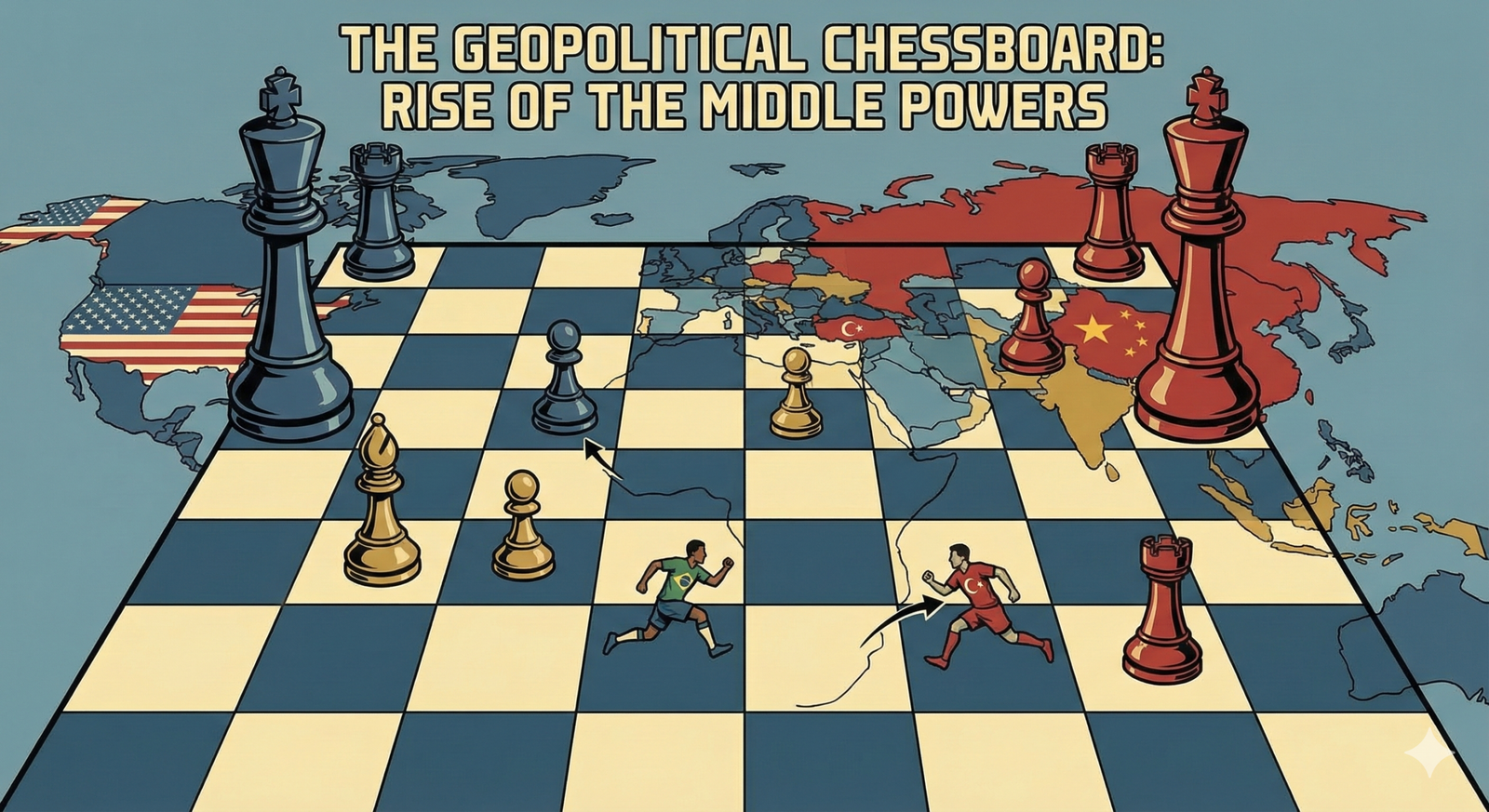
For decades, the global geopolitical landscape was defined by sharp binaries: the Cold War split the world between the United States and the Soviet Union, and the subsequent unipolar moment saw undisputed American hegemony. Today, however, the world is rapidly transitioning into a complex multipolar reality. As major superpower standoffs—particularly between the United States, China, and Russia—dominate the headlines, a quieter but equally profound transformation is taking place by Middle Powers.
We are witnessing the rise of the “middle powers.” These are nations not directly involved in the central struggles for global hegemony, yet they possess enough economic, military, and diplomatic weight to shape their surrounding regions. By masterfully navigating shifting alliances and leveraging global crises, these countries are boosting their regional influence and fundamentally altering how international diplomacy is conducted.
Defining the Modern Middle Powers
Historically, a “middle power” was a state with moderate influence that sought to uphold the international rules-based order, often acting as a mediator. Countries like Canada, Australia, and Norway fit this traditional mold. However, the modern middle power—often referred to as an “emerging power” or “swing state”—operates differently.
Today’s most influential middle powers include countries like India, Turkey, Saudi Arabia, Brazil, South Africa, and Indonesia. These nations are characterized by several key traits:
- Significant Demographic and Economic Weight: They often boast large populations, rapidly growing economies, and control over critical natural resources or strategic geographic chokepoints.
- Strategic Autonomy: Unlike traditional allies that fall strictly under a superpower’s security umbrella, modern middle powers prioritize their own national interests above alliance loyalty.
- Regional Ambition: They seek to establish themselves as the undisputed hegemons or indispensable partners within their immediate geographical spheres.
Navigating Shifting Alliances: The Era of Multi-Alignment
During the Cold War, the Non-Aligned Movement (NAM) was a defensive posture designed to keep developing nations out of the crossfire. Today, middle powers practice something entirely different: multi-alignment. This is an active, pragmatic, and highly transactional approach to foreign policy.
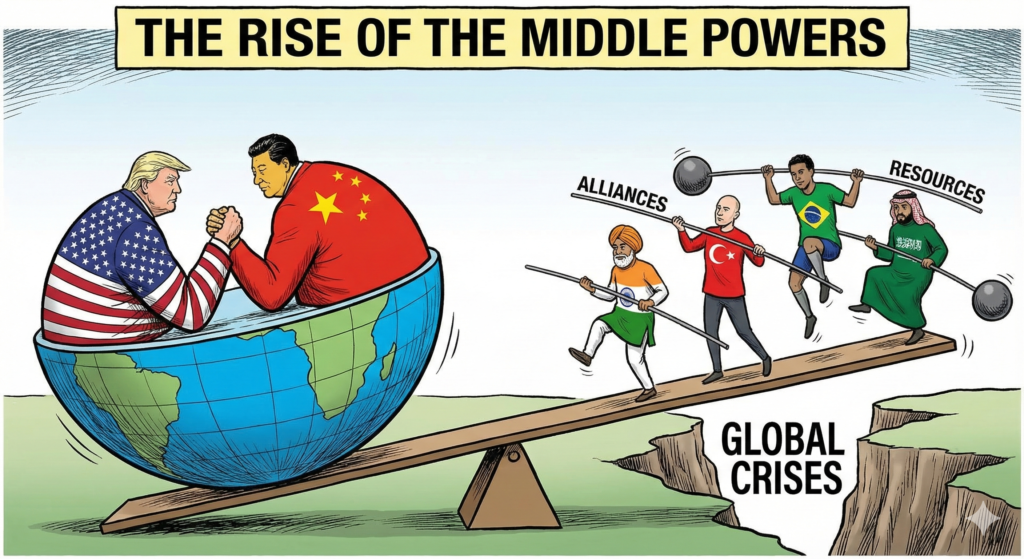
Instead of choosing sides in superpower standoffs, middle powers are hedging their bets and partnering with different superpowers simultaneously, depending on the specific issue at hand.
India: The Master of Strategic Hedging
India provides a masterclass in multi-alignment. New Delhi is a key member of the Quad (a security dialogue with the US, Japan, and Australia aimed at countering China in the Indo-Pacific). Yet, simultaneously, India maintains deep historical and military ties with Russia, continuing to purchase discounted Russian oil despite Western sanctions following the Ukraine war. Furthermore, India is a vital member of BRICS and the Shanghai Cooperation Organisation (SCO), forums heavily influenced by China and Russia. By refusing to be boxed into a single camp, India maximizes its strategic leverage and attracts investment and military technology from all sides.
Turkey: The Geopolitical Pivot
Turkey, a NATO member, perfectly illustrates the complexities of modern alliance management. While technically a Western ally, Ankara frequently pursues policies that directly contradict NATO interests. Turkey has purchased advanced missile defense systems from Russia, engaged in complex proxy conflicts with European allies in the Eastern Mediterranean, and actively courts Chinese investment. Turkey leverages its control over the Bosphorus Strait and its strategic position between Europe and the Middle East to extract concessions from both Washington and Moscow.
Leveraging Global Crises to Boost Regional Influence of Middle Powers
In a world increasingly destabilized by conflict and supply chain shocks, middle powers have realized that crises present unique opportunities. By stepping into the voids left by distracted superpowers, these nations are expanding their regional footprints.
Economic Arbitrage Amidst Sanctions
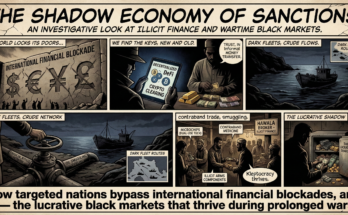
When the United States and its European allies impose sweeping economic sanctions on countries like Russia or Iran, middle powers often step in to play the middleman. They leverage the crisis by purchasing heavily discounted commodities (like oil and gas) and reselling them, or by acting as financial conduits that help sanctioned nations bypass Western financial systems. This economic arbitrage not only bolsters the middle power’s domestic economy but also makes the sanctioned superpower increasingly dependent on them.
Filling the Security Vacuum
As the United States gradually shifts its primary strategic focus toward the Indo-Pacific to counter China, a security vacuum has emerged in regions like the Middle East and North Africa. Middle powers are aggressively filling this space.
- Saudi Arabia and the UAE: Once heavily reliant on US security guarantees, these Gulf nations are now taking regional security into their own hands. They have intervened militarily in Yemen, engaged in complex proxy conflicts in Sudan and Libya, and have even brokered surprising diplomatic detentes, such as the China-mediated rapprochement between Saudi Arabia and Iran.
- Turkey’s Drone Diplomacy: Turkey has revolutionized regional conflicts through its advanced drone program. By supplying relatively affordable, highly effective combat drones (like the Bayraktar TB2) to allies in Libya, Azerbaijan, and Ukraine, Turkey has actively shaped the outcomes of foreign wars, cementing its status as an indispensable security provider in Eurasia and North Africa.
Diplomatic Mediation and Peacemaking
In an era where international bodies like the United Nations face gridlock, middle powers are positioning themselves as the new mediators of global conflicts. By hosting peace talks or facilitating prisoner exchanges, they elevate their diplomatic prestige and make themselves indispensable to the global order. Qatar’s role in mediating between the US and the Taliban, or between Israel and Hamas, and Turkey’s crucial role in brokering the Black Sea Grain Initiative between Russia and Ukraine, highlight how middle powers use diplomacy as a tool for regional dominance.
The Push for Alternative Architectures
Beyond traditional diplomacy, middle powers are seeking to reshape the very architecture of global governance. Frustrated by a post-World War II financial and political system dominated by the West (such as the IMF, World Bank, and the G7), these nations are building alternatives.
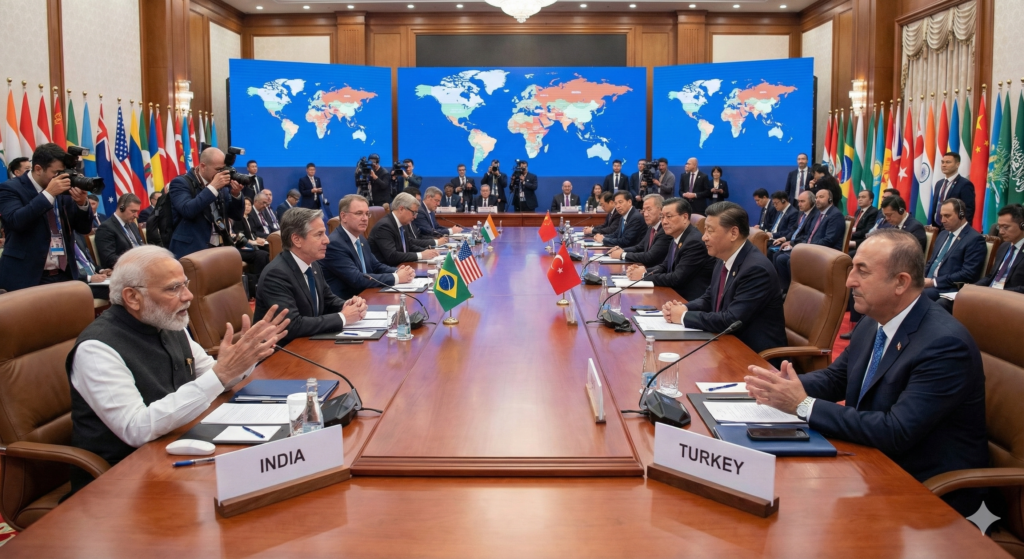
The expansion of the BRICS bloc (originally Brazil, Russia, India, China, and South Africa) to include nations like Saudi Arabia, the UAE, Egypt, and Ethiopia is a testament to this shift. Middle powers are actively exploring ways to “de-dollarize” bilateral trade, aiming to conduct transactions in local currencies to insulate themselves from US financial leverage. By championing alternative payment systems and parallel institutions, middle powers are not just navigating the global order; they are attempting to rewrite its rules.
Challenges and Future Trajectories of Middle Powers
While the rise of the middle power is a defining feature of the 21st century, this path is fraught with immense risks.
- Overextension: In their bid for regional dominance, countries like Turkey and the UAE risk overextending their military and financial resources by engaging in too many proxy conflicts simultaneously.
- Economic Vulnerability: Despite their geopolitical ambitions, many middle powers still suffer from deep domestic economic vulnerabilities, including high inflation, massive debt burdens, and reliance on foreign capital. A severe domestic economic crisis can quickly derail a nation’s assertive foreign policy.
- Superpower Backlash: Multi-alignment has its limits. As the strategic competition between the US and China intensifies, both superpowers will increasingly pressure middle powers to definitively choose a side. The tightrope of neutrality will become significantly harder to walk without facing punitive measures, such as secondary sanctions or the withholding of critical technology.
Conclusion to Middle Powers
The international system is undergoing a structural realignment. The days when a handful of superpowers could dictate global events without consulting regional actors are over. Today, the success of any major global initiative—whether it is managing climate change, securing critical mineral supply chains, or resolving a devastating regional conflict—depends entirely on the cooperation of the middle powers.
These nations have realized that in a multipolar world, agility is more valuable than rigid loyalty. By aggressively pursuing strategic autonomy, exploiting economic arbitrage opportunities, and stepping into regional security vacuums, they are reshaping the geopolitical map. As the traditional superpowers become increasingly bogged down in direct competition with one another, the trajectory of the 21st century will likely be determined not by the giants, but by the states in the middle.