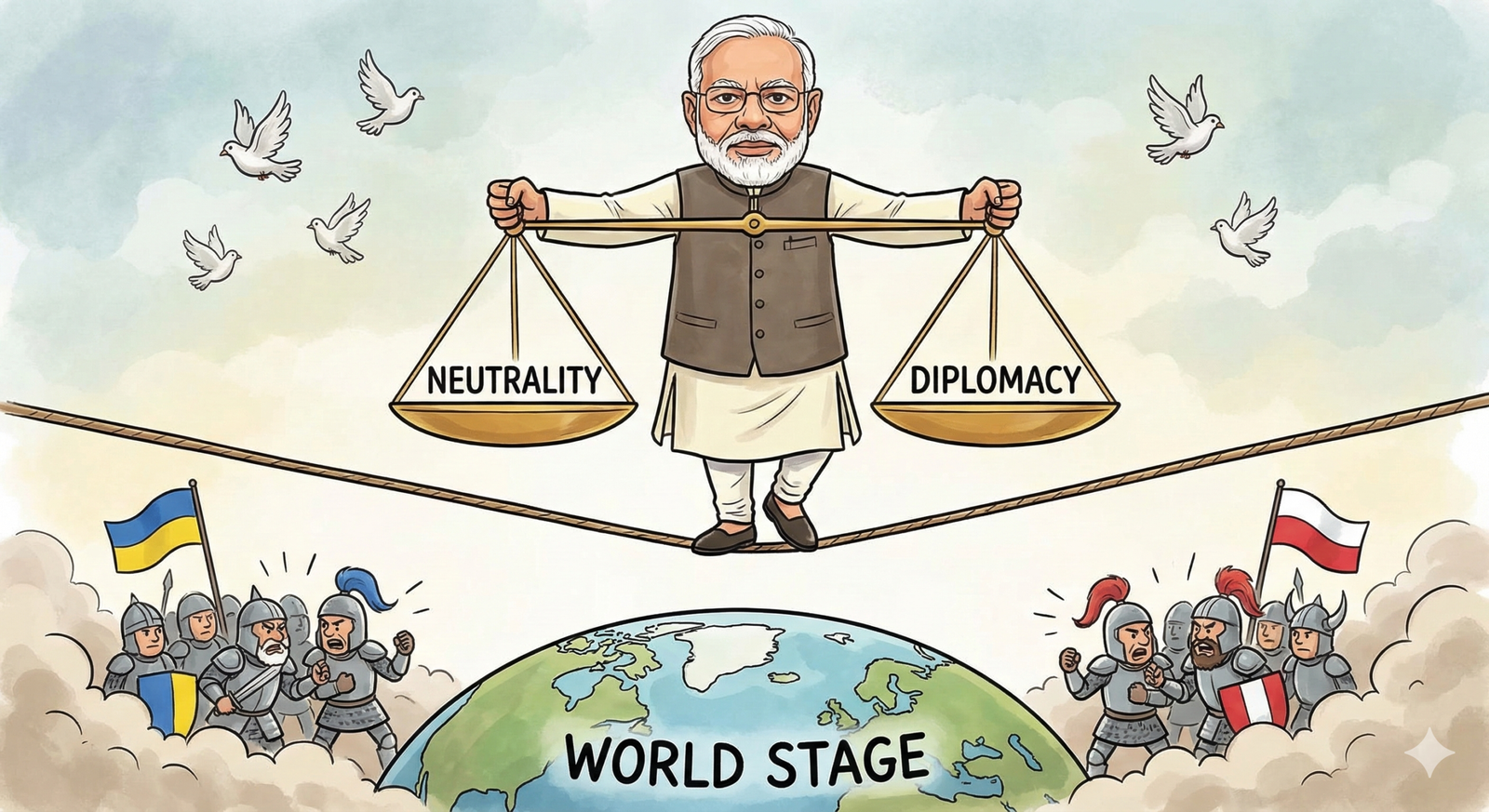
The escalation of the conflict between the United States, Israel, and Iran into direct kinetic warfare in February 2026 has sent shockwaves through the global geopolitical order. While the immediate focus remains on missile counts and submarine movements. Perhaps no nation is navigating a more complex or perilous path than India. India’s Neutrality.
As a massive regional neighbor, India is fundamentally tied to the stability of the Persian Gulf. This is not merely an abstract diplomatic exercise for New Delhi; it is an existential crisis. The death of Indian nationals in recent merchant shipping attacks in the Arabian Sea has shattered the premise that India can remain a passive observer.
The US-Israel-Iran war is, for India, a $80 billion high-wire act. It is a “neutrality test” that is being stress-tested by three interconnected factors: the safety of 10 million Indian citizens in the Gulf, the security of critical energy imports, and a strategic architecture that requires delicate balance between Washington, Tel Aviv, and Tehran.
The Human Stakes: The 10 Million Question
The most critical factor anchoring India to the Gulf conflict is its diaspora. The Gulf Cooperation Council (GCC) countries—particularly the UAE, Saudi Arabia, Oman, and Qatar—are home to approximately 10 million Indian nationals. This is the largest migrant population in the world and the single greatest source of global remittances, which reached a record $120 billion for India in 2025.
For India, the calculation in the Gulf is profoundly personal. If the war escalates to a regional conflagration involving Iran’s proxies (the Houthi movement and Iraqi militias) attacking GCC energy infrastructure, or if direct conflict spills across the Arabian Sea, the safety of these 10 million citizens will be immediately compromised.
When the conflict first ignited, India’s primary response was humanitarian. “Operation Ganga,” the 2022 evacuation of Indian students from Ukraine, set a precedent for rapid-response rescue. But an evacuation effort required for 10 million citizens is, on a logistical level, impossible. New Delhi must, therefore, work to ensure the conflict is contained.
The death of two Indian sailors aboard the merchant tanker MV True Confidence in the Gulf of Aden in early March. Reportedly in a missile attack launched from a Houthi-controlled region—provided a terrifying glimpse of what is at stake. These deaths were a national tragedy that immediately galvanized Indian public opinion, forcing New Delhi to acknowledge that “neutrality” cannot guarantee safety.
The Red Sea Crisis, the Cost of War and India’s Neutrality
India’s neutrality is also being tested by the severe impact the conflict has had on its energy security and commercial trade. Over 80% of India’s crude oil imports arrive through the Strait of Hormuz. And more than 60% of its non-oil merchandise trade traverses the Red Sea and Suez Canal route.
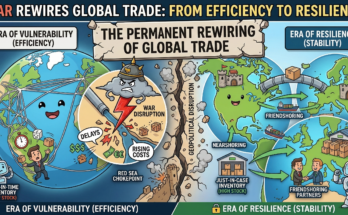
Since February 2026, the cost of war has been visible. Global shipping insurers have hiked premiums for vessels transiting the Arabian Sea and the Red Sea by 400%. A cost that is passed directly to the consumer. For India, a nation still managing inflationary pressures. A prolonged spikes in energy prices would devastate its 6.8% GDP growth trajectory.
India’s energy supply chains are uniquely vulnerable to the specific geography of this war. Attacks on merchant shipping (the so-called “tanker war 2.0”) directly threaten Indian supply lines. A total blockage of the Strait of Hormuz—the war’s most volatile choke point—would immediately trigger an energy crisis in India.
New Delhi’s response has been a sophisticated blend of passive and active defense. On one hand, the Indian Navy has deployed a task force, including guided-missile destroyers. To the Arabian Sea to “safeguard Indian commercial vessels and personnel.” This is an assertion of maritime power that stops short of joining the US-led Operation Prosperity Guardian in the Red Sea. It is an active defense of its own national interest, not a passive acceptance of a US security umbrella.
The Strategic Balancing Act: Washington, Tel Aviv, and Tehran
India’s core strategic objective in the Middle East has always been “strategic autonomy,” defined by independent relationships with all key regional actors. The March 2026 conflict is the ultimate challenge to this framework.
New Delhi’s strategic relationship with the United States has deepened significantly. Fueled by the 2025 “Initiative on Critical and Emerging Technology” (iCET) agreement and the shared imperative of counterbalancing a rising China. At the same time, India and Israel maintain a “strategic partnership” centered on agriculture, tech, and crucial defense technology.
However, India’s long-term connection to Iran is indispensable for its West Asia and Central Asia policy. New Delhi views Tehran not just as an energy supplier (though imports have fallen due to US sanctions) but as a critical gateway to Afghanistan and Central Asia through the development of the Chabahar Port. This is an investment intended to bypass Pakistan, an essential geopolitical objective.
The central failure of the 2025 “India-Middle East-Europe Economic Corridor” (IMEC)—announced at the G20 in Delhi—is that it depended on Israeli-Saudi normalization. The 2026 war has not just delayed IMEC; it has functionally buried it.
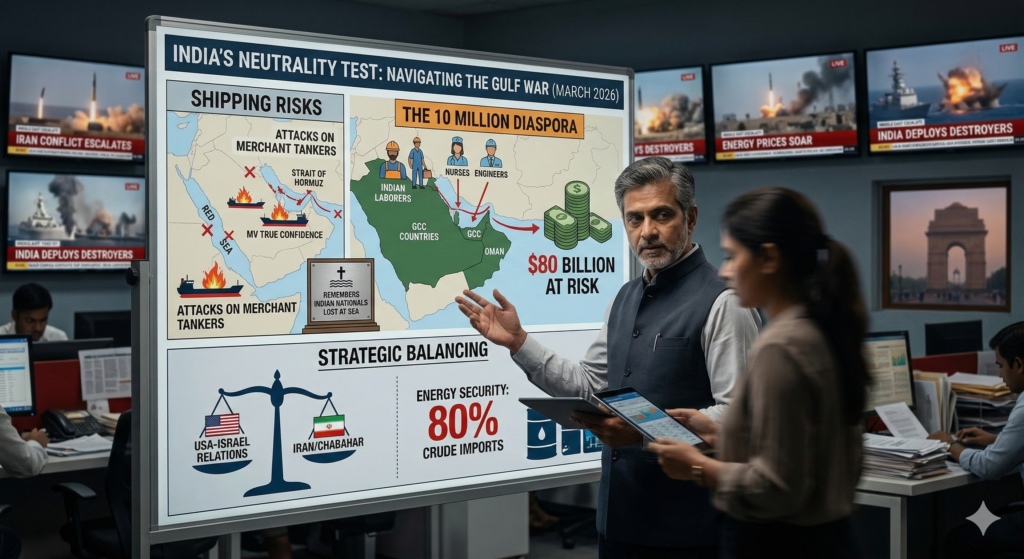
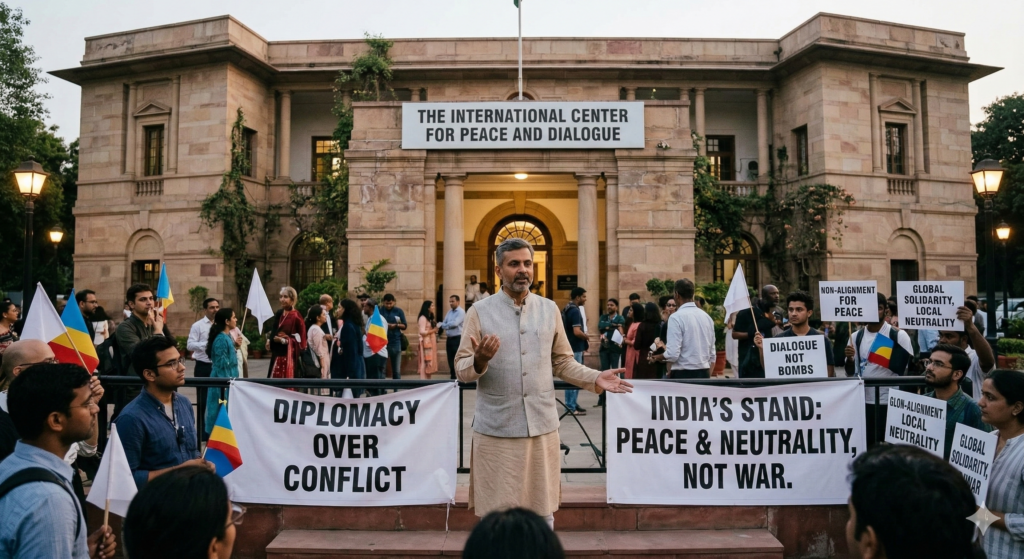
When India votes at the United Nations on resolutions condemning the conflict, it faces impossible choices. To condemn Iran is to risk Chabahar and its pathway to Central Asia. To condemn Israel is to damage a defense partnership. And to condemn the US is to isolate its most vital economic and strategic partner in the 21st century. India’s approach, therefore, has been to rely on the principle of de-escalation. Advocating for dialogue and the safety of the civilian population.
Conclusion to India’s Neutrality
The US-Israel-Iran war is the greatest foreign policy challenge Prime Minister Modi’s government has faced. In March 2026, “India’s Neutrality Test” is being conducted under fire. The death of Indian nationals at sea has proved that strategic detachment is not a sanctuary.
India cannot be a detached broker. The stability of the Gulf is a matter of its own national interest, tied to energy prices. Commercial security, and the physical safety of 10 million of its own people.
India’s strategy, therefore, must evolve from passive neutrality to “active stabilization.” This does not mean joining a military coalition; rather, it means utilizing its unique relationship with all combatants—especially Iran and the US—to be the leading voice for an immediate diplomatic de-escalation. For New Delhi, this war is not a choice; it is an economic and humanitarian emergency.