Meta Description: Explore the rise of the “Dupe Economy.” Learn how inflation and TikTok culture have turned finding affordable alternatives into a status symbol, threatening major luxury and legacy brand loyalty.
For decades, the ultimate consumer flex was the logo. Carrying a Louis Vuitton Speedy bag or flashing a Rolex was a shorthand for success, status, and belonging to an exclusive club. If you couldn’t afford the real thing, you bought a knock-off quietly on a Canal Street corner and hoped no one noticed the stitching.
Those days are over.
Welcome to the “Dupe Economy,” a rapidly shifting retail landscape where finding a cheaper alternative to a high-end product isn’t shame-inducing—it’s a badge of honor. Driven by the economic realities of inflation and the viral velocity of TikTok, Gen Z has rewritten the rules of consumerism. In doing so, they are dismantling traditional notions of brand loyalty and putting legacy companies on high alert.
The Anatomy of a “Dupe”
Before diving deeper, it is crucial to distinguish a “dupe” from a counterfeit.
A counterfeit is an illegal fake designed to deceive the buyer into thinking it is the authentic product, complete with stolen logos and trademarks.
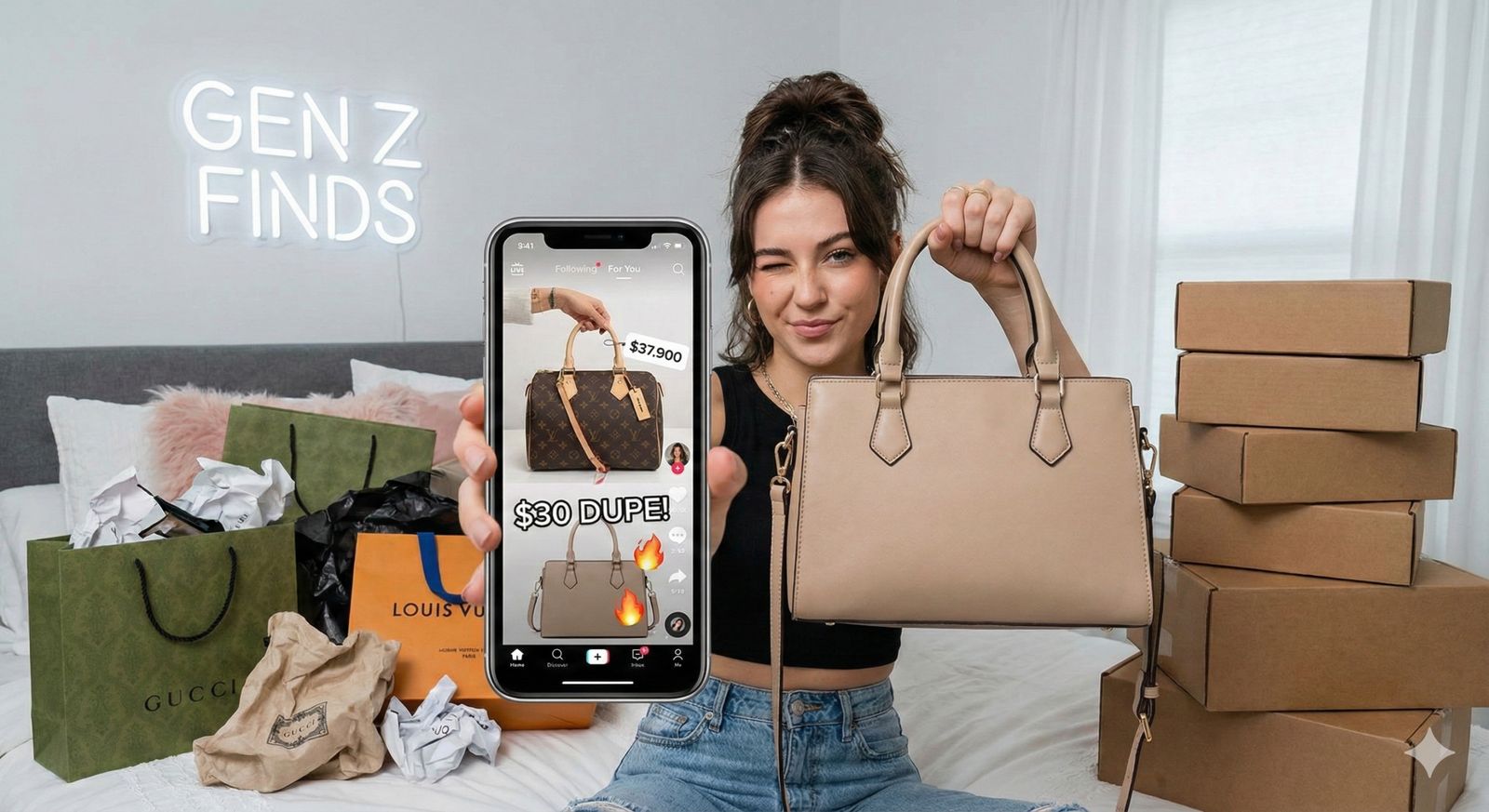
A dupe (short for duplicate) is a legal alternative. It is a product from a more affordable brand that closely mimics the aesthetic, function, or ingredients of a prestige item, without infringing on trademarks. Think of an e.l.f. Cosmetics putty primer that performs identically to a high-end Tatcha primer for a fraction of the cost.
The Dupe Economy thrives not on deception, but on radical transparency.
The Perfect Storm: Inflation Meets the Algorithm
The rise of dupe culture is not an accident; it is the inevitable result of two colliding forces: tightening wallets and hyper-accelerated trend cycles.
1. The Economic Reality Check
Young consumers today are facing historic inflation, sky-high rent, and crippling student debt. The aspirational marketing of the 2010s—which suggested you were one $2,000 handbag away from happiness—now feels tone-deaf.
When the price of eggs is shocking, spending $120 on leggings just for a specific logo feels fiscally irresponsible. The dupe offers the dopamine hit of participating in a trend without the subsequent buyer’s remorse.
2. TikTok as the Great Equalizer
TikTok is the engine of the Dupe Economy. The platform’s algorithm rewards discovery and “life hacks.” The hashtag #dupe has billions of views, serving as a massive, crowdsourced consumer reports database.+1
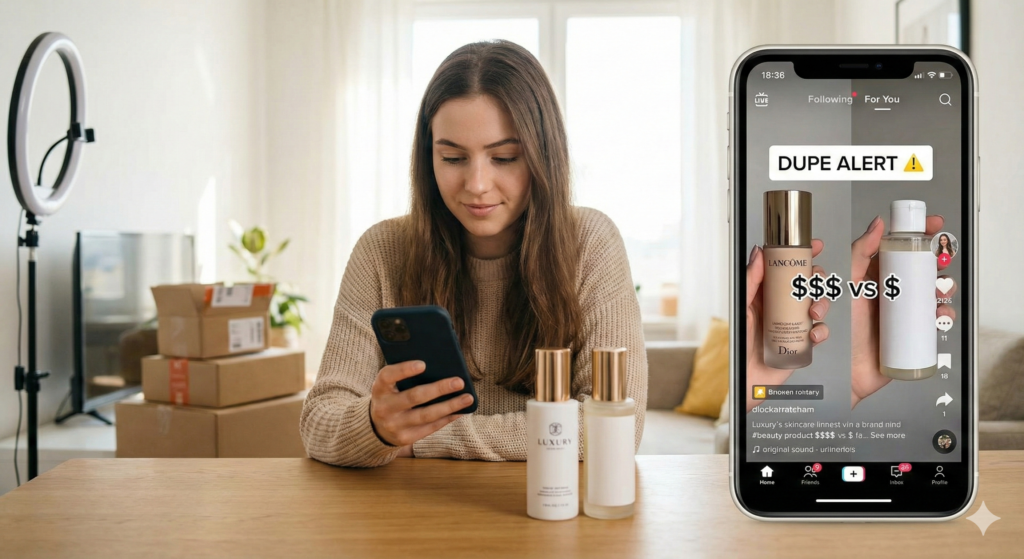
A viral video will showcase a trending, expensive item (like the Dyson Airwrap or the Lululemon Align tank), immediately followed by a creator revealing the $30 Amazon or Target equivalent that is “literally the exact same thing.”
TikTok has democratized aesthetic trends. You no longer need a six-figure salary to achieve the “clean girl aesthetic” or the “quiet luxury” look; you just need to know which dupes to buy.
From Shame to Flex: The Cultural Shift among Gen Z
The most profound change in the Dupe Economy is psychological. For Gen Z, savvy consumerism is the new status symbol.
Paying full price for a legacy brand is increasingly viewed not as a flex, but as being a “sucker.” It suggests you fell for marketing hype rather than doing your research. Conversely, finding a perfect dupe demonstrates resourcefulness and intelligence.
Broadcasting your dupe finds on social media is a form of community service—it’s anti-gatekeeping. Sharing the link to the $40 DHGate version of a designer chair is a way of saying, “We can all have nice things without going broke.” The social currency has shifted from owning the expensive item to hacking the system that overprices it.
The Business Impact: Legacy Brands on Notice “Dupe”
This cultural shift presents an existential threat to luxury and legacy brands that have relied on prestige pricing and blind loyalty for decades.
The Erosion of Brand Equity
If a $15 lipstick performs identically to a $60 designer lipstick in a blind TikTok test, what is the $45 premium actually paying for?
In the Dupe Economy, the “brand tax”—the premium charged simply for the logo—is being rejected. Brands are being forced to justify their price points with tangible quality differences, sustainable practices, or ethical labor, because “vibes” are no longer enough to sustain a 500% markup.
The Industries Hit Hardest
- Beauty and Skincare: This is ground zero for dupe culture. Ingredient transparency means consumers can easily find products with the same active ingredients for a fraction of the price. Brands like The Ordinary and e.l.f. have built empires by offering “dupe-quality” products as their primary business model.
- Fast Fashion vs. Mid-Tier: While ultra-fast fashion (Shein, Temu) is often the source of dupes, mid-tier brands like Abercrombie or Aritzia are finding their popular styles instantly replicated on Amazon the moment they go viral.
- Tech Accessories: From AirPods Max alternatives to Stanley tumbler lookalikes, hardware aesthetics are easily copied, forcing consumers to question if the name-brand functionality is truly superior.
Conclusion: The End of Blind Loyalty?
The Dupe Economy is not a passing fad; it is a structural realignment of consumer values. It signals the end of an era where brands could dictate value top-down.
For legacy brands, the path forward is difficult. They cannot win a race to the bottom on price. Instead, they must lean into what dupes cannot replicate: heritage, unparalleled customer experience, genuine innovation, and ironclad ethical standards.
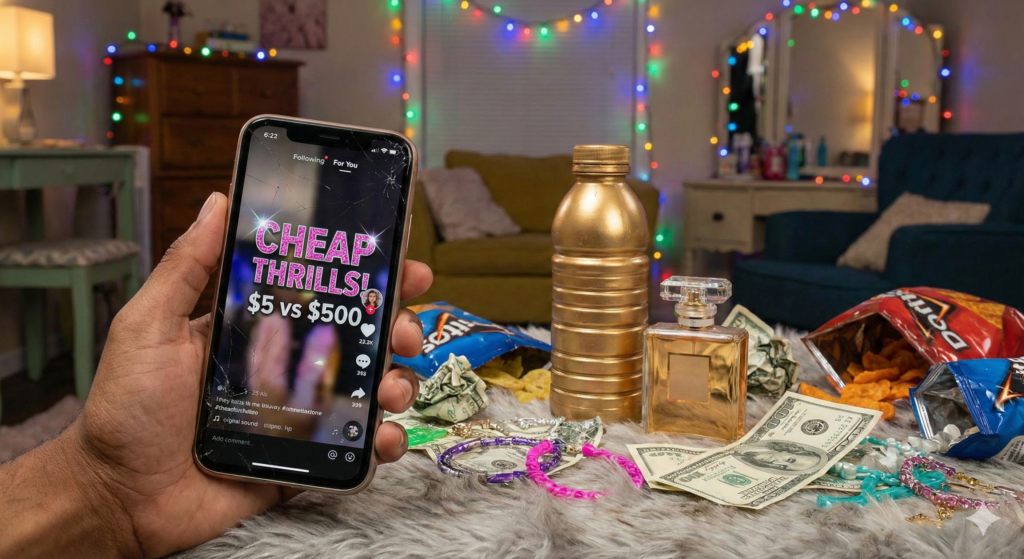
In a world flooded with “good enough” alternatives, being the “real thing” still matters—but only if the brand can articulately and transparently explain why. Until then, Gen Z will keep scrolling, searching for the next great dupe.