For decades, the Strait of Hormuz has been characterized as the “jugular vein” of the global energy economy. This narrow waterway, separating Iran from the Arabian Peninsula, is more than just a geographical feature; it is a geopolitical pivot point upon which the stability of global markets rests. However, the traditional understanding of Gulf security is undergoing a violent transformation.
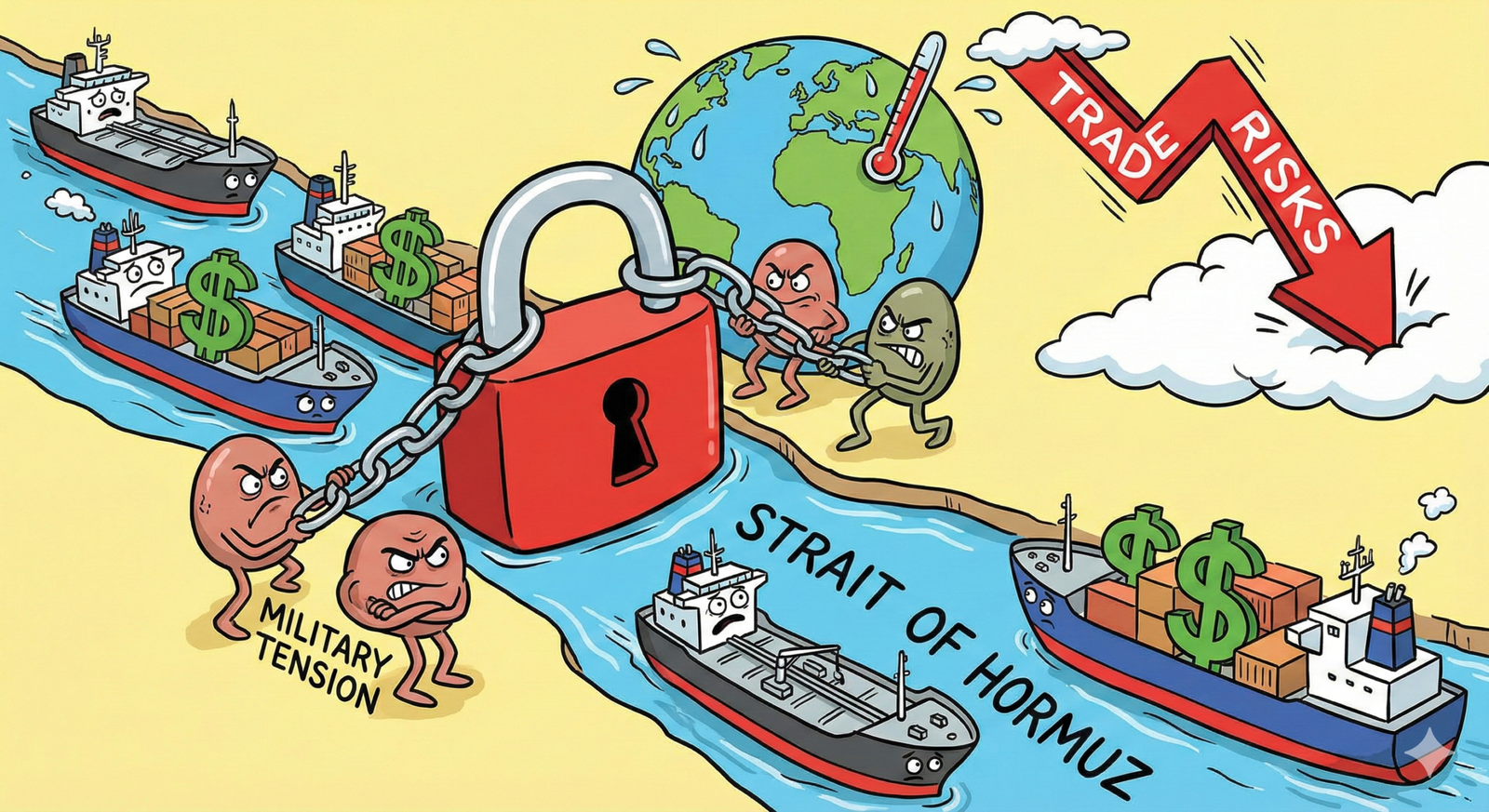
We have moved past the era of sporadic tanker harassment and into a new phase defined by direct. Sudden kinetic military strikes involving major powers including the United States. Israel, Iran, and the complex web of neighboring Gulf states. This escalation is not merely regional saber-rattling; it is fundamentally threatening critical maritime chokepoints and forcing logistics giants. Insurers, and national governments to completely reshape their global trade risk models.
As the threshold for direct military confrontation lowers in the Persian Gulf. The assumptions that have governed international shipping for half a century are dissolving. Replacing calculated risk with profound uncertainty.
The Anatomy of an Indispensable Chokepoint
To understand the magnitude of the current threat, one must grasp the unique nature of the Strait of Hormuz. At its narrowest point, the shipping lanes are only two miles wide in each direction. Through this bottleneck flows roughly 20-30% of the world’s total oil consumption and a significant percentage of global Liquefied Natural Gas (LNG).
Unlike other maritime chokepoints such as the Suez Canal or the Strait of Malacca. The Strait of Hormuz has no viable alternative. While pipelines exist across Saudi Arabia and the UAE to bypass the Strait, their capacity is insufficient to handle the total volume of trade that traverses the waterway daily.
Therefore, Strait of Hormuz security is not an optional concern for the global economy; it is an existential one. Any prolonged disruption here does not just mean higher gas prices at the pump; it signifies potential systemic shock to global industrial output and energy-dependent supply chains.
The New Paradigm: From Shadow War to Kinetic Strikes
The current crisis is defined by a shift in tactics. For years, tensions in the Gulf played out in the “gray zone”—deniable sabotage, cyberattacks, and proxy conflicts. Today, the veil of deniability has largely lifted, replaced by overt military actions that have spiked Iran-US tensions to dangerous levels.
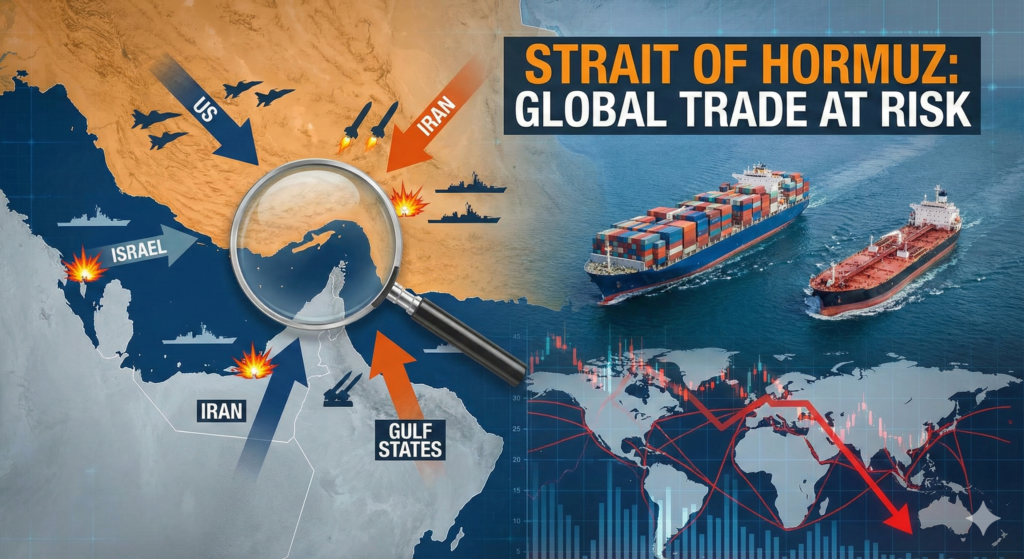
The involvement of multiple actors has complicated the security landscape significantly:
- Iran’s Asymmetric Leverage: Facing superior conventional military foes, Iran has doubled down on its ability to threaten maritime traffic. Its arsenal of ballistic missiles, cruise missiles, and weaponized drones overlooking the Strait means it can disrupt shipping without necessarily deploying its navy. The threat isn’t just closure, but the creation of a “no-go zone” through area-denial weapons.
- The Israeli Factor: The expansion of the shadow war between Israel and Iran into the maritime domain has added a volatile new variable. Reported strikes on vessels and infrastructure have broadened the theatre of conflict. Making commercial shipping potential collateral damage in a state-on-state rivalry.
- US Posture and Gulf State Anxiety: The US military presence, intended to act as a deterrent, now also acts as a potential target magnet in a highly contested environment. Meanwhile, Gulf states like Saudi Arabia and the UAE are caught in an impossible geopolitical bind. Reliant on US security guarantees but acutely aware that their own critical infrastructure (desalination plants, oil terminals) is within easy reach of Iranian retaliation should a full-scale conflict erupt.
This complex interplay means a miscalculation by any single actor can trigger a cascading series of kinetic strikes that rapidly engulfs commercial shipping lanes.
Reshaping Global Trade Risk Models
The most significant, long-term impact of this sustained Persian Gulf military escalation is being felt in the boardrooms of London, Singapore, and New York. The shipping and insurance industries are fundamentally rewriting their risk assessment manuals.
The End of “Safe Passage” Assumptions
Previously, global trade models assumed safe passage through international waters as a constant, with disruptions viewed as rare anomalies. Today, instability in the Gulf is viewed as a chronic condition. Logistics firms are now forced to factor in potential delays, rerouting costs. And cargo loss as part of their baseline operational costs rather than emergency contingencies.
The Insurance Premium Spike on Strait of Hormuz
The immediate barometer of maritime security threats is the insurance market. “War risk” premiums for voyages transiting the Strait of Hormuz have become highly volatile, spiking dramatically after every reported incident. These costs are inevitably passed down the supply chain to consumers.
Furthermore, some insurers are becoming hesitant to cover vessels with affiliations to nations involved in the geopolitical tensions, creating a complex web of uninsurable risks that threatens to paralyze parts of the shipping fleet.
The Contagion Effect and Supply Chain Resilience
The crisis in Hormuz is not happening in a vacuum. When combined with instability in other areas, such as the Red Sea’s Bab el-Mandeb strait, the cumulative pressure on global shipping lanes is immense.
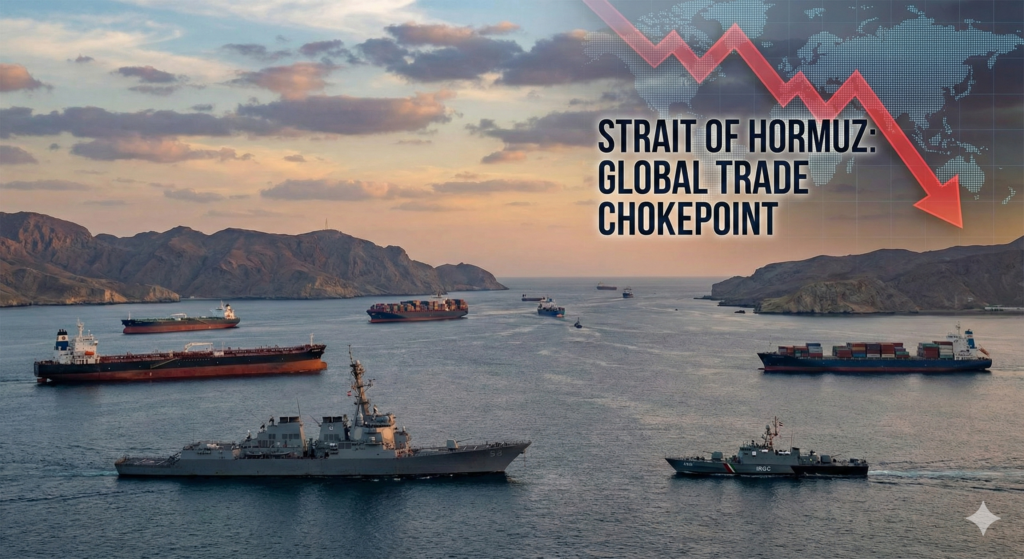
Corporations are reacting by attempting to “de-risk” their supply chains. This involves seeking suppliers outside the Persian Gulf region, increasing inventory stockpiles (moving from “just-in-time” to “just-in-case” inventory management), and investing heavily in supply chain visibility software. This represents a massive, inflationary restructuring of global trade flow away from efficiency and toward resilience.
Conclusion: The New Normal of Maritime Uncertainty Strait of Hormuz
The era where Gulf security could be guaranteed solely by the presence of a US carrier strike group appears to be fading. The democratization of high-tech weaponry, combined with intense geopolitical rivalries involving Iran. Israel, and the US, has turned the Strait of Hormuz into a permanent flashpoint.
The sudden military strikes witnessed recently are likely not outliers, but rather the establishing events of a new normal. For the global economy, this means that the free flow of energy through the world’s most critical maritime chokepoint can no longer be taken for granted.
So, moving forward, global trade risk models must remain fluid. Adapting to a reality where the geopolitics of the Persian Gulf dictate the stability of international markets. The challenge for international bodies and commercial entities alike is no longer just preventing conflict. But learning to navigate a global trading system perpetually on the brink of disruption.