The landscape of global trade has rarely been as volatile as it is in early 2026. For international business managers, the textbook models of globalized efficiency and just-in-time delivery are being rapidly rewritten. Driven by unprecedented shifts in US import regulations like Tariff, multinational corporations are facing a stark new reality. The era of predictable trade flows has been replaced by an environment defined by sudden legal rulings, emergency tariffs, and geopolitical maneuvering.
In February 2026, the global market witnessed a seismic shift when the US Supreme Court struck down previously implemented tariffs under the International Emergency Economic Powers Act (IEEPA). Within hours, the administration countered by enacting a temporary 10% global import duty under Section 122 of the Trade Act of 1974. This rapid-fire sequence of events serves as a stark reminder: US tariff policies in 2026 are not just policy debates; they are immediate, operational disruptions.+1
This article explores how these sudden regulatory shifts are forcing global companies to adapt their international business strategies, elevate their trade compliance departments, and fundamentally restructure their global supply chains.
The New Reality of US Import Regulations and Tariff in 2026
So to understand the impact on international business management, one must first understand the sheer scale of the 2026 tariff environment. The implementation of the Section 122 global tariff—while offering exemptions for critical minerals, pharmaceuticals, and certain agricultural products—casts a wide net over the global economy.
These emergency tariffs have fundamentally altered the math of international procurement. So for decades, the primary driver of supply chain design was cost efficiency. Companies chased the lowest labor and production costs, resulting in highly concentrated manufacturing hubs, predominantly in Asia. Today, that concentration represents a massive financial liability.
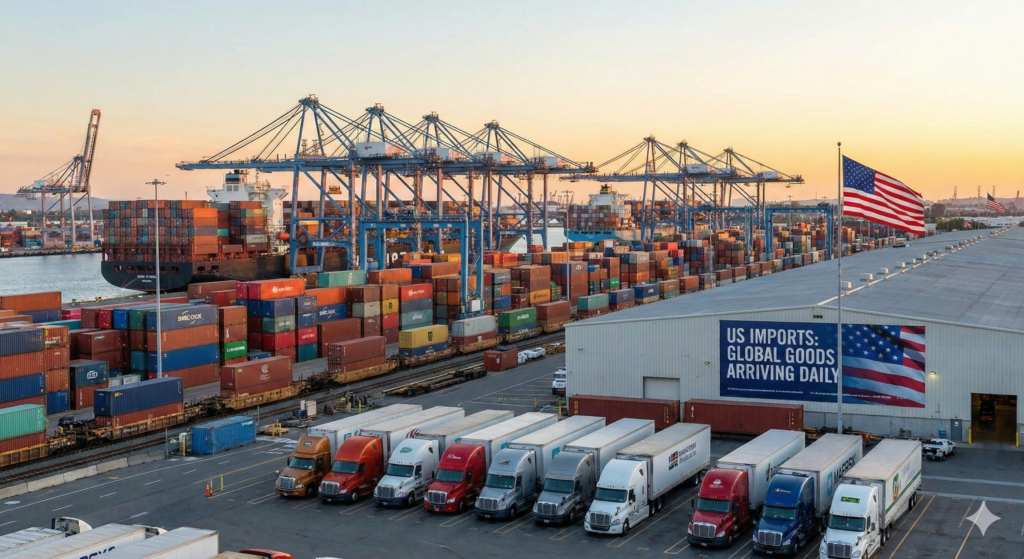
The volatility of US tariff policies in 2026 means that a product priced competitively on Monday could suddenly become unprofitable by Friday due to a newly signed executive proclamation. This unpredictability is shifting the core philosophy of international business from “cost optimization” to “risk mitigation and resilience.”+1
Restructuring Global Supply Chains: From Efficiency to Resilience
The most visible ripple effect of these tariffs is the aggressive supply chain restructuring occurring across almost every major industry. Businesses can no longer afford to absorb double-digit tariff hikes without destroying their profit margins, nor can they simply pass all costs onto inflation-weary consumers.
Instead, companies are physically moving their operations. This restructuring manifests in three primary strategies:
- Nearshoring: Moving production closer to the end consumer. For the US market, this has triggered a manufacturing boom in Mexico, taking advantage of the United States-Mexico-Canada Agreement (USMCA) to bypass overseas tariffs.
- Friendshoring: So relocating supply chains to countries that share strong geopolitical and trade alliances with the US. Mitigating the risk of future retaliatory tariffs.
- The “China+1” Strategy: While completely decoupling from China is practically impossible for many sectors due to deep infrastructural reliance. Companies are aggressively developing secondary manufacturing bases in countries like Vietnam, India, and Indonesia to dilute their tariff exposure.
However, moving a supply chain is not as simple as flipping a switch. Establishing new logistics networks, qualifying new vendors, and extending lead times introduce a fresh set of complexities. Furthermore, customs authorities are cracking down on transshipment—the practice of routing goods through a third country to evade tariffs—meaning companies must have unimpeachable visibility into their sub-tier suppliers.+1
The Strategic Elevation of Trade Compliance
Also historically, trade compliance was often viewed as a back-office administrative function. A department focused on filling out customs paperwork and ensuring basic regulatory adherence. The 2026 US tariff policies have permanently elevated this role.
Today, trade and customs departments are strategic partners in the boardroom. According to recent industry reports. The financial burden of tariffs has forced executives to integrate trade compliance directly into their procurement and operational planning.+1
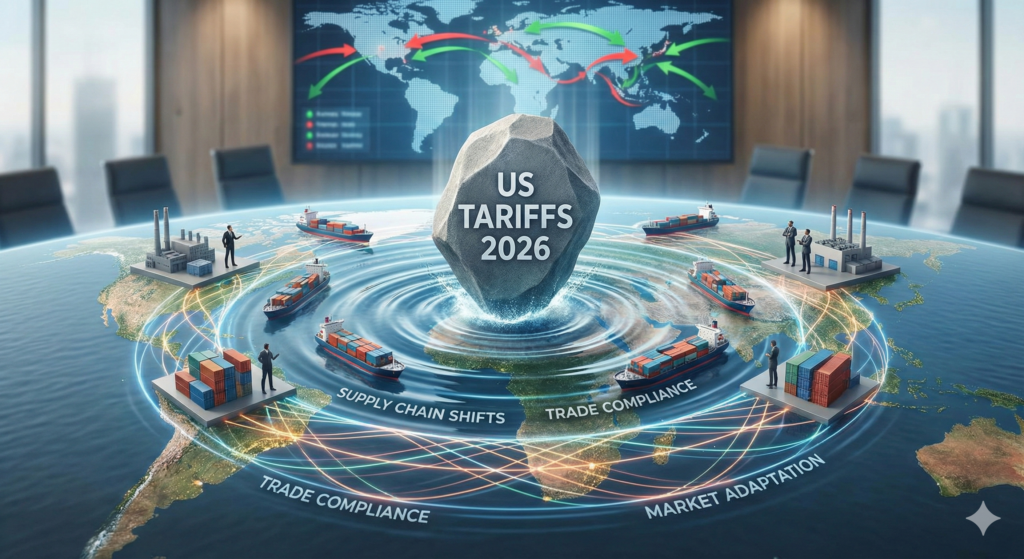
International business managers must now balance overlapping compliance demands. Assessing a new supplier is no longer just about quality and cost. It requires a deep dive into rules of origin, geopolitical risk, and Environmental, Social, and Governance (ESG) standards. A supplier that helps bypass an emergency tariff is useless if they violate international labor laws or carbon border adjustment mechanisms. This holistic, integrated approach to third-party risk management is the new gold standard for multinational enterprises.+2
Tactical Adaptations for International Business Managers
Navigating the turbulent waters of US import regulations requires agility, foresight, and the right technological tools. Companies that are successfully weathering the 2026 tariff shock are employing several key tactical adaptations:
- Deep Supplier Mapping: You cannot manage what you cannot see. Best-in-class international business managers are deploying advanced tracking to map their supply chains down to the raw material level (Tier 3 and Tier 4 suppliers). This granular visibility is crucial for proving a product’s origin and defending against transshipment allegations.
- Dynamic Scenario Planning: Static annual forecasts are obsolete. Firms are utilizing AI-driven analytics to run continuous scenario planning. What happens if the 10% global tariff becomes permanent? What if a retaliatory tariff hits European auto parts? Having pre-vetted contingency plans allows companies to pivot in days rather than months.
- Renegotiating Vendor Contracts: Procurement teams are actively rewriting contracts to build in flexibility. This includes clauses for shared tariff burdens, multi-sourcing requirements. And shorter commitment terms to avoid being locked into a supplier that suddenly becomes geographically disadvantaged by new trade policies.
- Strategic Tariff Engineering: Companies are re-evaluating product designs and classifications to legally minimize tariff impact. Sometimes, a minor change in a product’s assembly process or component makeup can shift it into a different, lower-tariff customs classification.
Conclusion to US Tariff
The year 2026 will undoubtedly be remembered as a watershed moment for international business management. The whiplash of legal battles, sudden executive actions, and sweeping US tariff policies has permanently dispelled the illusion of a friction-free global market.
Supply chain restructuring is no longer a theoretical exercise; it is an urgent survival mandate. As companies scramble to nearshore operations. Map their sub-tier suppliers, and elevate their trade compliance strategies. One truth becomes clear: agility is the new currency of global trade. The businesses that will thrive in this era of emergency tariffs are those that stop treating trade volatility as a temporary storm to wait out, and instead build the dynamic. Resilient infrastructure necessary to navigate the new normal.