The past few years have served as a brutal wake-up call for global commerce. Images of container ships idled off the coast of California, critical shortages of semiconductors halting auto production lines, and empty shelves in retail stores shattered the illusion of an infallible global supply chain Next-Gen Logistics. The pre-pandemic model, characterized by lean, “just-in-time” inventory management and a reliance on linear, often opaque sourcing, proved catastrophically brittle when faced with unprecedented systemic shocks.
Today, the scramble for survival has transitioned into a strategic overhaul. US enterprises are spearheading a massive transformation, moving away from fragile efficiency toward resilient adaptability. This is not merely about buying more warehouses or hiring more trucks; it is a fundamental rethinking of how goods move from inception to the end consumer. This revolution is being driven by next-gen logistics—a convergence of advanced technologies designed to handle global disruptions, speed up distribution, and future-proof the very backbone of the economy.
At the heart of this transformation are three critical innovations: Digital Twins, Predictive Machine Learning, and Blockchain integration.
The Paradigm Shift: From Reactive to Proactive in Next-Gen Logistics
For decades, supply chain management was largely reactive. Companies looked at historical sales data to predict future demand and reacted to disruptions as they happened, often scrambling to find alternative suppliers or shipping routes via phone calls and spreadsheets.
The new era of US industrial engineering demands proactive visibility. The goal is to shift from a “just-in-time” philosophy, which leaves zero room for error, to a “just-in-case” capability, supported by deep digital intelligence. This involves creating an information buffer that is just as valuable as a physical inventory buffer. By leveraging data, companies can anticipate bottlenecks before they manifest physically, ensuring business continuity in an increasingly volatile geopolitical and environmental landscape.
Innovation 1: Digital Twins—The Virtual Sandbox for Real-World Risks
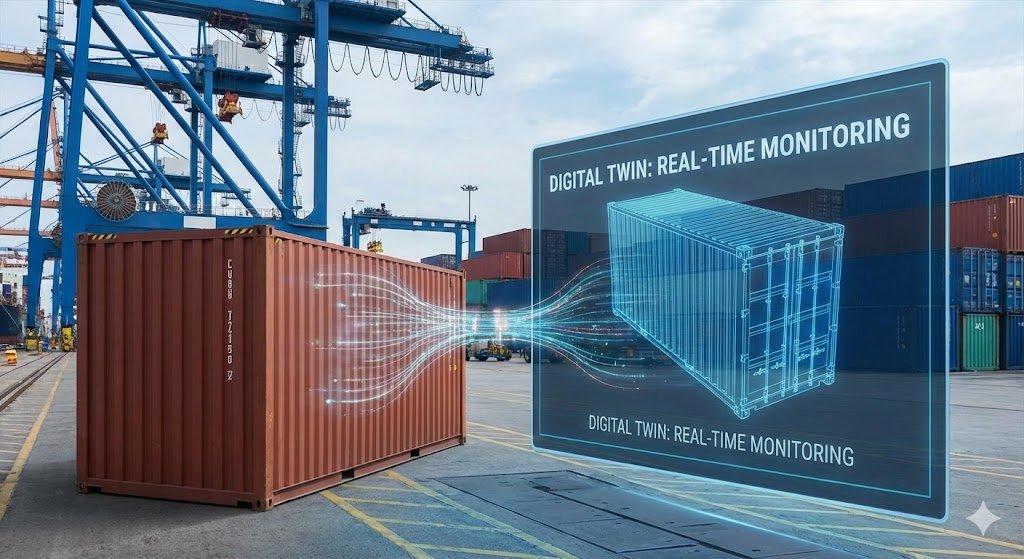
One of the most powerful tools in the next-gen logistics arsenal is the “Digital Twin.” A digital twin is far more than a 3D model; it is a dynamic, living virtual replica of an entire physical supply chain network. It integrates real-time data from IoT sensors on shipping containers, GPS data from trucks, inventory levels in warehouses, and even weather patterns affecting shipping lanes.+1
For major US manufacturers, the digital twin serves as a flight simulator for logistics managers. Instead of testing a new shipping route or a change in suppliers in the real world—where failure could cost millions and disrupt customers—they can simulate these changes in the digital twin first.
Key Advantages:
- Scenario Planning: Companies can run “what-if” scenarios. What happens if a major port closes due to a hurricane? What if a primary supplier in Asia goes offline for a week? The digital twin reveals exactly where the cascading failures will occur across the network, allowing managers to build pre-emptive contingency plans.+1
- Identifying Invisible Bottlenecks: Often, supply chain slowdowns aren’t caused by a single major event but by micro-inefficiencies aggregated over time. Digital twins can highlight these hidden friction points, such as inefficient handover processes at specific distribution centers, which are invisible in traditional reporting.
Innovation 2: Predictive Machine Learning—Seeing Around Corners
Traditional demand forecasting is often like driving using only the rearview mirror. It relies heavily on what happened last year to predict what will happen next year. Next-gen logistics replaces this with predictive Machine Learning (ML) and Artificial Intelligence (AI).
US tech firms and enterprise retailers are deploying AI algorithms that ingest vast quantities of disparate data—not just sales history, but social media trends, economic indicators, real-time point-of-sale data, and even long-range weather forecasts—to predict demand with unprecedented accuracy.
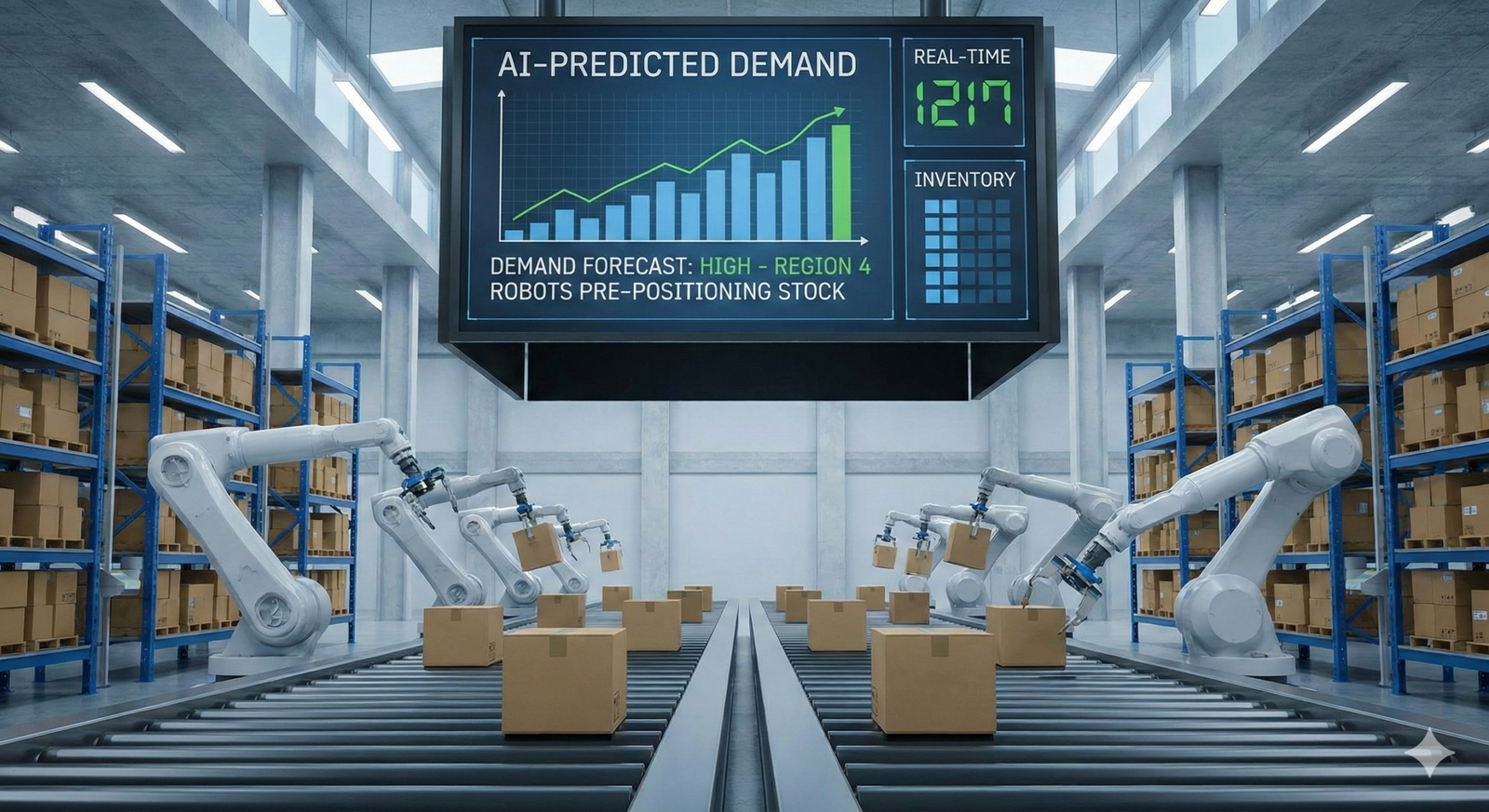
This is crucial for inventory optimization. Instead of holding massive, expensive stockpiles of goods “just in case,” or running out of hot items, predictive ML allows companies to position the right amount of inventory in the right regional warehouses before the demand spike occurs. This enables faster “last-mile” delivery to the consumer while freeing up working capital previously tied up in stagnant inventory.
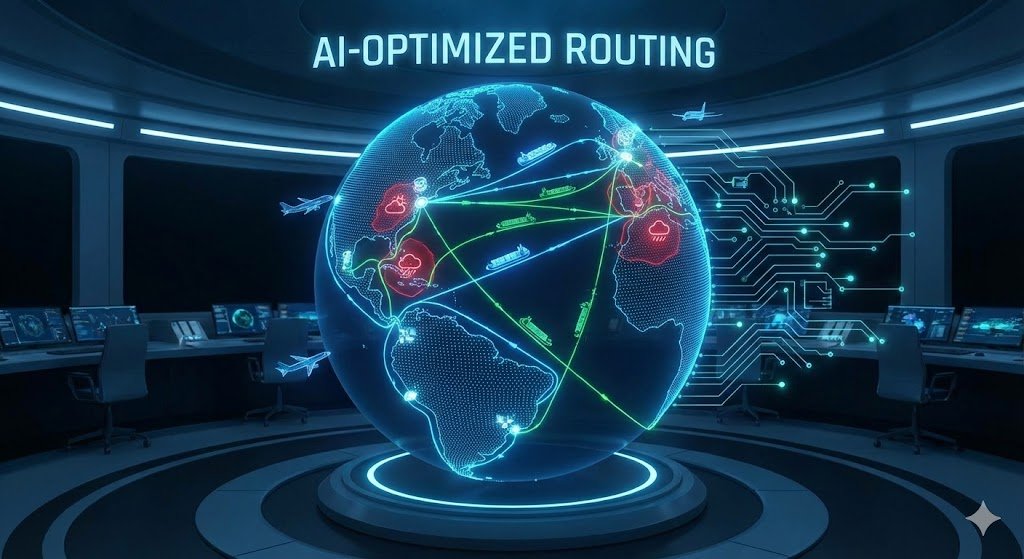
Furthermore, ML is revolutionizing route optimization. It doesn’t just find the shortest path; it finds the most efficient path based on predicted traffic congestion, port wait times, and fuel costs, dynamically rerouting shipments in transit as conditions change.+1
Innovation 3: Blockchain—The Protocol of Trust and Speed
While often associated with cryptocurrency, blockchain technology is finding its most practical and valuable application in logistics. A supply chain is fundamentally a series of transactions and handoffs between different entities—suppliers, manufacturers, shippers, customs brokers, and retailers. Traditionally, managing the paperwork, verifying origins, and processing payments between these parties is slow, manual, and prone to error or fraud.+1
Blockchain provides a shared, immutable ledger that all permitted parties can access but no single party can alter. This creates a “single source of truth” for the entire supply chain.
Transformative Applications:
- Instant Provenance Verification: For industries like pharmaceuticals, aerospace, or food, knowing exactly where an ingredient or component came from is critical for safety and compliance. Blockchain allows a company to instantly trace the journey of a product back to its origin point, verifying its authenticity in seconds rather than days.+1
- Streamlining Complex Invoicing: Through “smart contracts,” payments can be automated. For example, a smart contract could be programmed to automatically release payment to a vendor the moment a shipment is verified as received at a US port via IoT sensors, matching the digital purchase order on the blockchain. This eliminates weeks of administrative reconciliation and speeds up cash flow for all partners.
Conclusion to Next-Gen Logistics
The transition to these advanced systems is no longer a luxury for industry leaders; it is an existential necessity. The volatility of the modern world means that static, traditional supply chain models are destined to fail.
By integrating digital twins to de-risk decision-making, utilizing predictive ML to anticipate market needs, and adopting blockchain to ensure speed and transparency, US enterprises are doing more than just fixing current problems. They are building an intelligent, autonomic nervous system for global commerce. This overhaul ensures that when the next global disruption arrives, American industry won’t just survive the shock waves—it will navigate through them with speed and resilience. The future of moving goods is digital, predictive, and decentralized, defining the true potential of next-gen logistics.