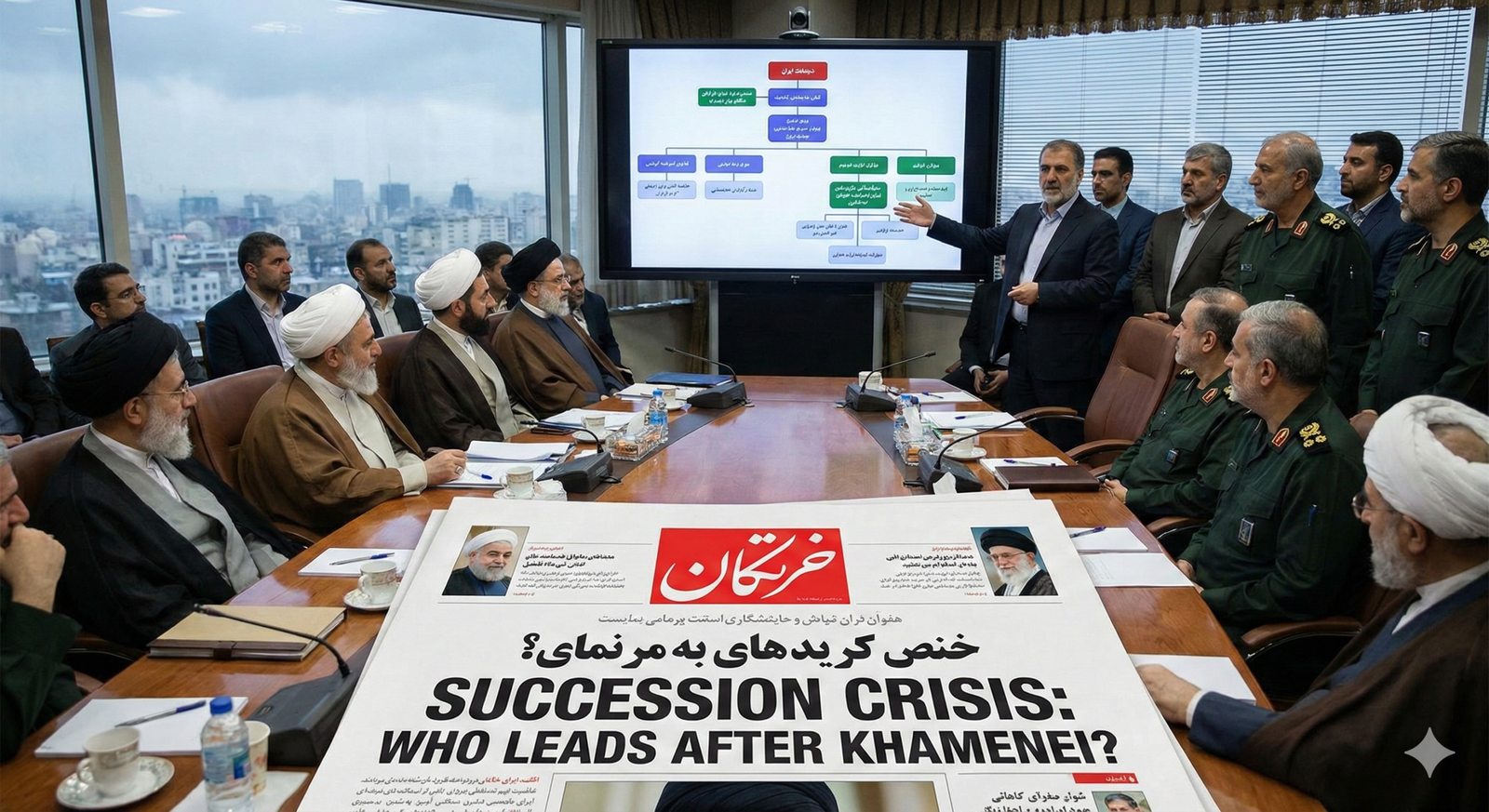
The seismic shift that geopolitical analysts have feared for decades has arrived at the most volatile moment imaginable. The death of Supreme Leader Ayatollah Ali Khamenei in March 2026. Coming amidst the devastating US-Israeli airstrikes dubbed “Operation Genesis,” has caused Iran succession crisis.
Tehran is no longer just a capital under attack; it is the epicenter of a high-stakes power vacuum. The transition of power, once envisioned by the regime as a carefully managed affair, is now taking place under fire. This is not merely a question of who will wear the mantle of the Supreme Leader next. It is a battle for the soul of the Iranian state, pitting declining clerical authority against rising military might.
As the dust settles on airstrikes and the political maneuvering begins, the world must grapple with critical questions: Who controls the levers of power in post-Khamenei Iran? Has the Islamic Revolutionary Guard Corps (IRGC) totally usurped the clergy? And is the apparent US-Israeli goal of “regime change” a feasible strategy for stabilization, or a recipe for prolonged destabilization in an already fractured region?
The Shattered Illusion of a Stable Transition
For years, Iran’s “deep state” had been preparing for the eventual passing of the octogenarian leader. The plan was always for a smooth handover of power to ensure the survival of the Velayat-e Faqih (Guardianship of the Islamic Jurist) system.
However, the context of March 2026 has shattered that illusion. The ongoing war has stressed the regime’s infrastructure to its breaking point. Public dissatisfaction was already at historic highs before the current conflict; now. Combined with the economic fallout of the war, the regime is facing immense internal pressure.
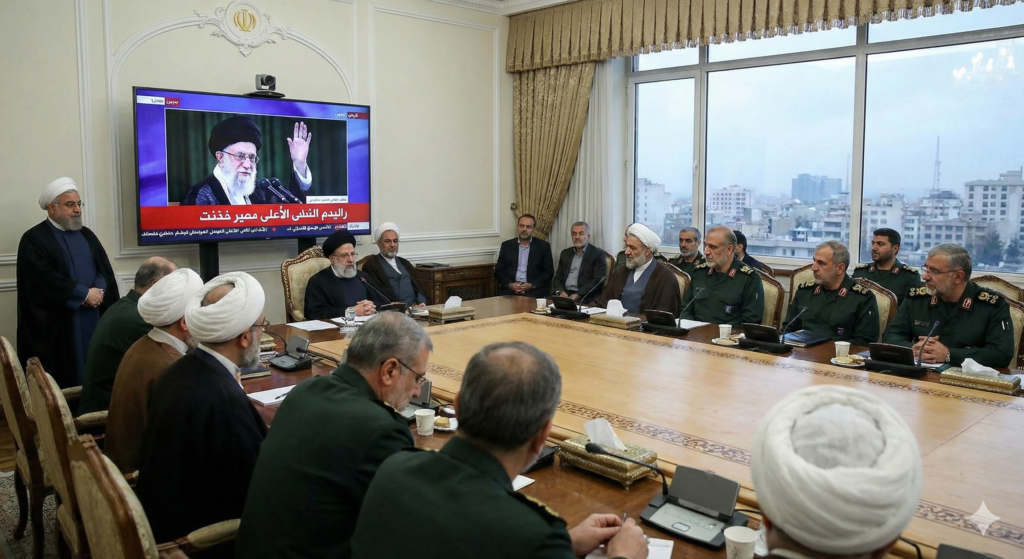
The Iran succession crisis is now a three-dimensional chess game played during an earthquake. The traditional mechanisms of power transfer are being tested against the raw realities of wartime survival. The incoming leader will not inherit a stable theocracy, but a besieged fortress state struggling for its life.
The Constitutional Façade vs. Realpolitik
Constitutionally, the task of selecting the next Supreme Leader falls to the Assembly of Experts, a body of 88 elected clerics. In theory, they debate the theological qualifications of candidates and vote.
So in reality, the Assembly of Experts has long been viewed by Iran specialists as a rubber stamp for decisions already made in the shadows. In the 2026 landscape, their role is even more diminished. The criteria for the next leader will likely shift from theological prowess to hardline pragmatic capability—specifically. The ability to maintain internal order and manage the ongoing war against the US and Israel.
The clerics still hold symbolic power, but the real contenders for the throne will be determined by who possesses the loyalty of guns and money.
The Top Contender: Mojtaba Khamenei and Dynastic Ambition
For over a decade, whispers in Tehran’s political corridors have centered on one name: Mojtaba Khamenei, the second son of the late Supreme Leader.
Mojtaba has operated deeply within the regime’s security apparatus. He has cultivated intense loyalty among key factions of the Basij militia and the intelligence services. His primary strength is continuity; he represents the safest bet for the entrenched elite who wish to preserve the status quo of his father’s era.
However, Mojtaba’s ascension is fraught with challenges. Firstly, he lacks high-ranking clerical credentials, a significant hurdle in a theocratic system. Secondly, appointing the Leader’s son reeks of dynastic rule—something the 1979 revolution explicitly sought to overthrow by deposing the Shah. In a moment of national crisis, selecting a figure perceived as nepo-tistic could further inflame public anger.
Despite these drawbacks, in a wartime scenario where loyalty to the “deep state” is paramount, Mojtaba remains a leading candidate to fill the power vacuum in Tehran.
The True Kingmakers: The Rise of the IRGC Praetorian Guard
While names like Mojtaba Khamenei or current President Ebrahim Raisi are bandied about, the true arbiters of the Iran succession crisis wear uniforms, not clerical robes.
Over the last twenty years, the Islamic Revolutionary Guard Corps (IRGC) has morphed from a revolutionary militia into a sprawling military-industrial-financial complex that dominates the Iranian economy and foreign policy. Under the pressure of the 2026 war, their power has become absolute.
The IRGC is now the country’s Praetorian Guard. They control the ballistic missile program that is central to the current conflict. They manage the proxy networks across the Middle East, and they suppress domestic dissent.
It is highly improbable that any Supreme Leader can ascend without the explicit backing of the IRGC top brass. The Generals may prefer a weaker clerical figurehead they can easily manipulate. Rather than a strongman who might challenge their autonomy. The post-Khamenei era will likely see the final transformation of Iran from a clerical theocracy into an outright military dictatorship with an Islamic veneer. The IRGC’s primary goal will not be religious purity, but regime survival and the protection of their vast economic interests.
The “Regime Change” Gamble: Stabilization or Chaos of Iran succession crisis?
The timing of Khamenei’s death amidst Operation Genesis has fueled speculation that the ultimate goal of the US and Israel is reducing the regime’s capability to the point of collapse—effectively, regime change.
If this is the goal, policymakers must seriously assess the feasibility versus the catastrophic risks.
The feasibility of a swift, democratic transition in Iran following a decapitation strike is vanishingly low. The reformist movement has been systematically crushed over the past decade. There is no organized, moderate opposition-in-waiting ready to take the reins.
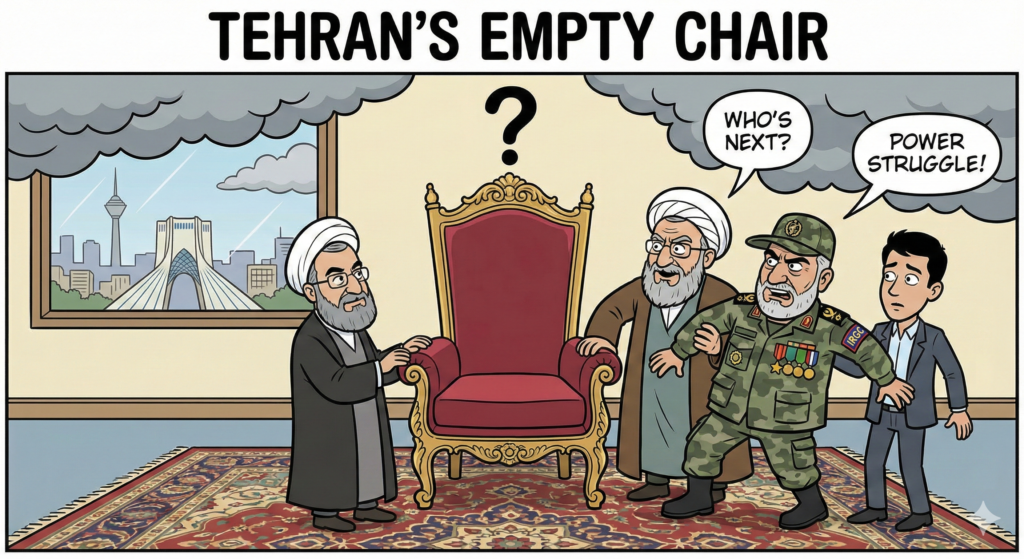
Instead, the sudden collapse of the central government in Tehran would likely lead to pIran succession crisis. The risks include:
- A “Libya Scenario”: The fracturing of the country along ethnic lines (Kurds, Azeris, Balochis, Arabs), leading to civil war.
- Loose Weapons: The potential for Iran’s vast arsenal of missiles and drones to fall into the hands of non-state actors amid chaos.
- An IRGC Clampdown: The most likely outcome of external pressure for regime change is a brutal retrenchment by the IRGC. Leading to a North Korea-style garrison state that is even more aggressive internationally because it has nothing left to lose.
Conclusion to Iran succession crisis
The death of Ali Khamenei in March 2026 is a watershed moment. The power vacuum in Tehran is real, but it is unlikely to be filled by democratic forces. The succession crisis is accelerating the shift of power away from the seminaries of Qom and toward the IRGC barracks.
As the world watches who steps up after Khamenei, it must recognize that the new leadership will be forged in the fires of the current war. Hoping for a collapse of the system is a dangerous gamble. The resulting chaos of a failed state in Iran would likely be far more damaging to global stability than the current hostile, yet cohesive, regime.