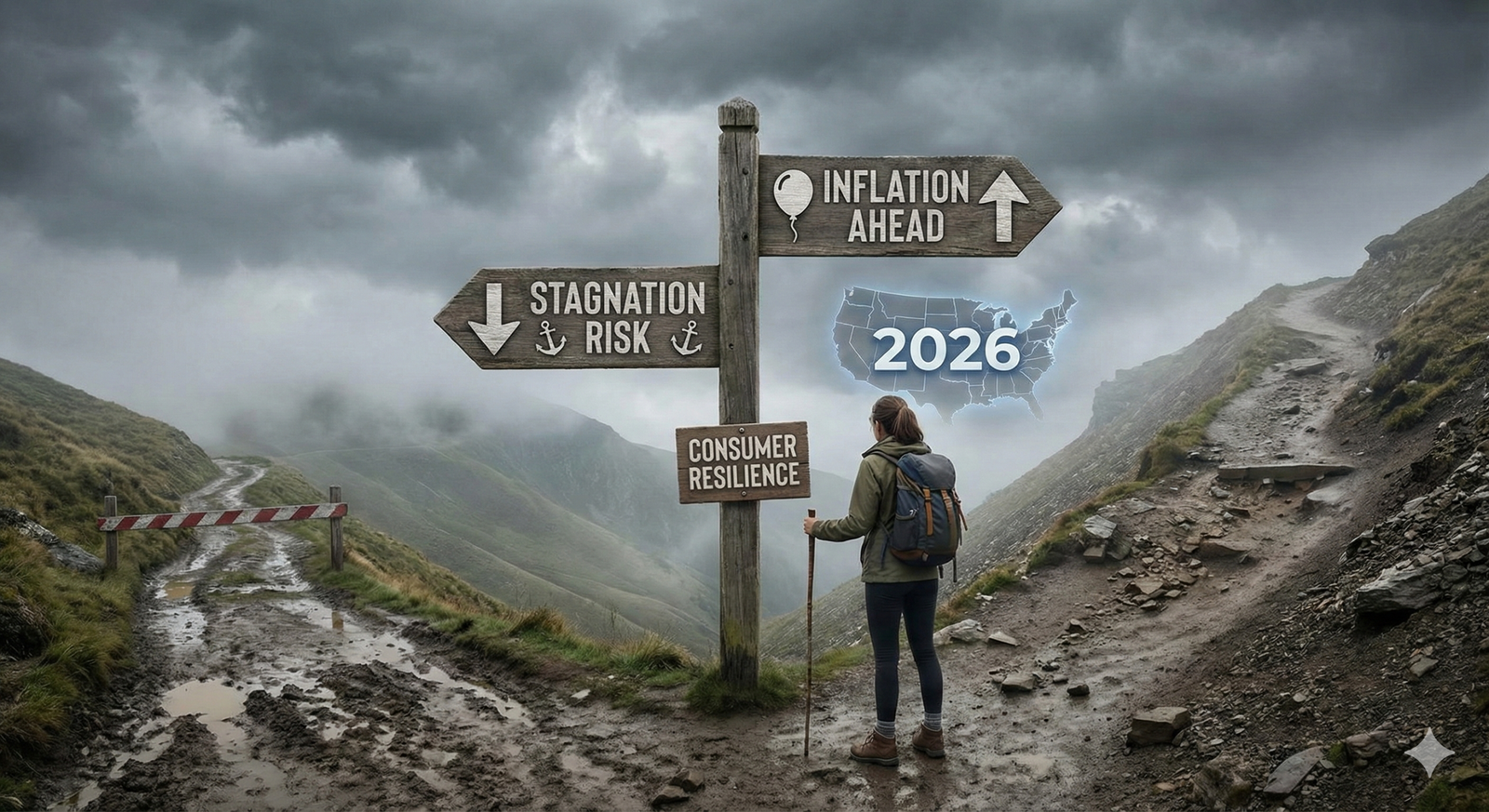
The US economy landscape in early 2026 is defined by a perplexing mix of signals that are challenging traditional economic models and forcing households and boardrooms alike to rewrite their playbooks. We find ourselves in an era of contradictions: help-wanted signs remain ubiquitous, yet purchasing power feels increasingly eroded. The stock market shows bouts of optimism, while Main Street sentiment remains muted.
At the heart of this complexity lies a growing fear of a dreaded economic phantom: stagflation. This article provides an in-depth analysis of the 2026 US economy, exploring how the collision of a persistently tight labor market and stubbornly sticky inflation is reshaping consumer spending habits and complicating corporate forecasting. As we navigate this uncharted territory, understanding these dynamics is crucial for anyone making financial decisions in the current climate.
The Specter of Stagflation in 2026
For years, stagflation—the toxic combination of stagnant economic growth, high unemployment, and high inflation—was viewed as a historical relic of the 1970s. In 2026, it has become a very real, modern concern. While we aren’t seeing the high unemployment that characterized the classic definition, the other two pillars are firmly in place, creating a “stagflation-lite” scenario that is proving incredibly difficult to manage.
The Federal Reserve’s aggressive interest rate hiking cycle, which began years ago, was designed to cool the economy and bring inflation back to its 2% target. By 2026, it’s clear that the “last mile” of this fight is the hardest. While headline inflation has come down from its post-pandemic peaks, core inflation—particularly in the services sector—remains uncomfortably high, hovering persistently above the Fed’s comfort zone. This is what economists mean by sticky inflation. Prices for rent, insurance, healthcare, and dining out simply refuse to budge significantly downward.
Simultaneously, the high interest rates intended to tame inflation have successfully slowed overall economic growth. GDP prints for the last few quarters have been lackluster, flirting with stagnation. The result is an economy that feels stuck: prices are rising faster than growth, squeezing real incomes and creating a pervasive sense of economic malaise.
The Labor Market Paradox: Tight, Expensive, and Essential
The most confounding element of the 2026 US economy is the labor market. Despite slowing growth and high borrowing costs, the demand for workers remains exceptionally strong. The unemployment rate continues to defy expectations, holding at historical lows.
This tight labor market is a double-edged sword. On one side, it is the primary pillar of consumer resilience. Americans have jobs, and they feel relatively secure in them. This job security gives them the confidence to keep spending, preventing the economy from spiraling into a deep recession.
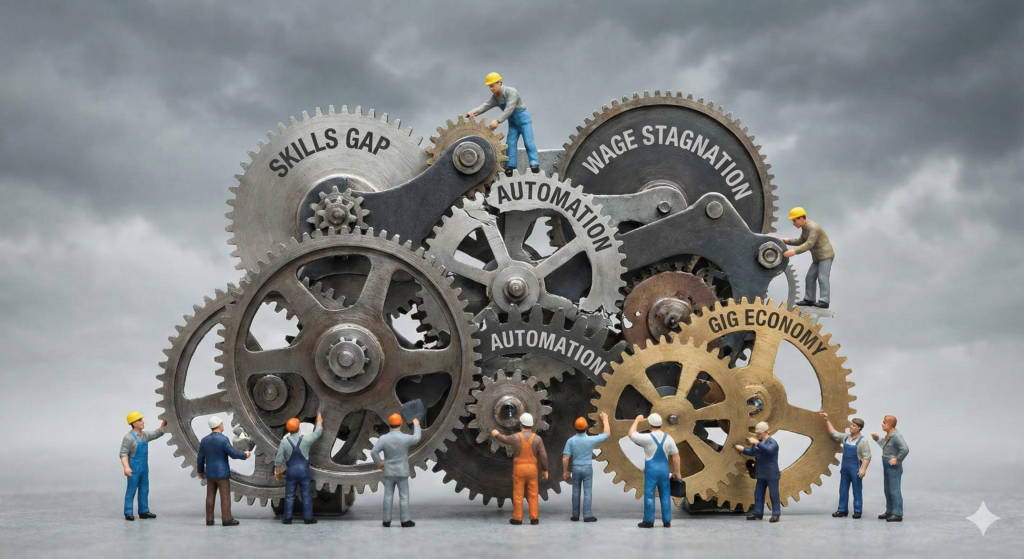
On the other side, this tightness is a primary driver of sticky inflation. With a scarcity of available workers, particularly in skilled trades and service industries. Businesses are forced to offer higher wages to attract and retain talent. These rising labor costs are then passed on to consumers in the form of higher prices. Creating a self-perpetuating wage-price spiral that central bankers are struggling to break. The structural shifts in the workforce—from baby boomer retirements to a re-evaluation of work-life balance—suggest this tightness is a long-term feature, not a bug, of the 2026 economy.
Consumer Resilience Tested: Shifts in Spending Habits
The American consumer has been the undisputed hero of the post-pandemic economic recovery, consistently defying predictions of a collapse. However, in 2026, that consumer resilience is showing clear signs of strain and, more importantly, adaptation. The era of revenge spending is over; the era of strategic spending has begun.
Households are not necessarily stopping their spending, but they are radically changing how they spend. We are witnessing a pronounced bifurcation in consumer spending habits:
- The Trade-Down Effect: There is a massive shift away from premium brands towards private-label and discount alternatives across groceries, household goods, and apparel. Value is the new primary driver of purchase decisions.
- Essentials vs. Discretionary: Spending on non-essentials like big-ticket electronics, luxury items, and high-end travel is softening. Consumers are prioritizing needs—housing, food, energy, healthcare—and becoming far more selective about their wants.
- The Experience Economy Endures, but Changes: While goods spending slows, demand for experiences remains relatively robust, though with a budget-conscious twist. People are still dining out, but they might choose a fast-casual restaurant over fine dining. Domestic travel is favored over expensive international trips.
- Reliance on Credit: A concerning trend in 2026 is the rising reliance on credit cards and buy-now-pay-later services to maintain living standards. With excess savings from the early 2020s largely depleted. Many households are borrowing to bridge the gap between their wages and the rising cost of living, a strategy that is sustainable only as long as the job market remains strong.
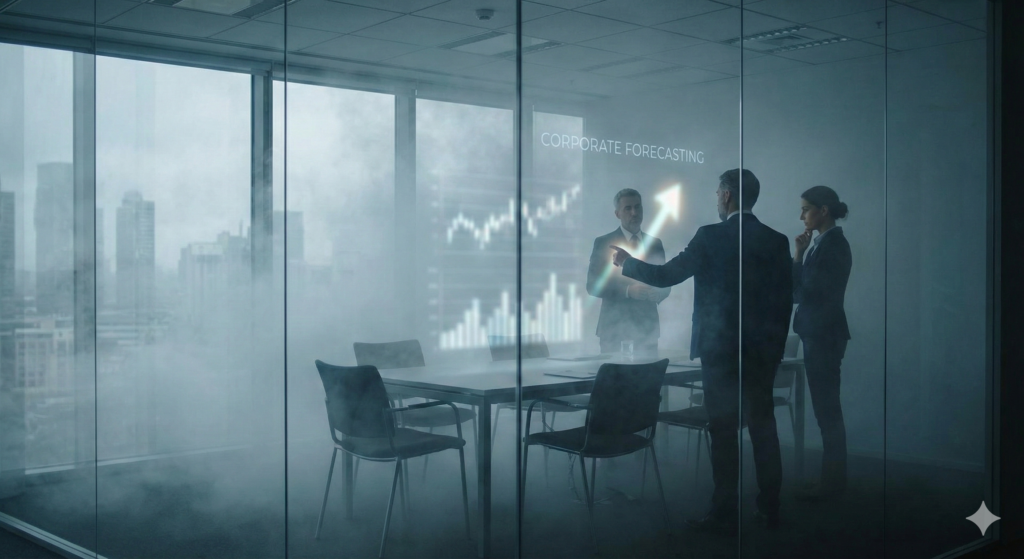
Corporate Forecasting in a Fog of Uncertainty of Economy
For business leaders, the 2026 US economy presents a nightmarish environment for corporate forecasting. The traditional levers of planning are jammed. How do you price your product when your input costs (labor, materials, energy) are rising unpredictably. But your customers are becoming increasingly price-sensitive?
This dilemma is forcing companies to adopt new strategies:
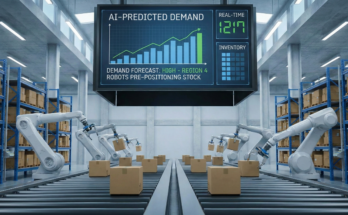
- The Efficiency Imperative: Instead of focusing on top-line growth through expansion, the corporate mantra for 2026 is margin protection through efficiency. This means investments in automation, AI, and operational streamlining to offset rising labor costs.
- Dynamic and Surgical Pricing: Gone are the days of across-the-board price hikes. Companies are using sophisticated data analytics to implement surgical price increases where demand is inelastic, while offering promotions and lower-priced tiers to retain value-conscious consumers. “Shrinkflation”—reducing product size while keeping the price the same—remains a common, albeit unpopular, tactic.
- Hoarding Labor: Despite the pressure to cut costs, many firms are reluctant to lay off workers, remembering the immense difficulty of re-hiring post-pandemic. This “labor hoarding” puts a floor under the economy but also keeps corporate cost structures high, further squeezing profit margins.
Conclusion: Adaptability is the Only Path Forward in the US Economy
As we move further into 2026, the narrative of the US economy remains unwritten. The tug-of-war between stagflation risks and consumer resilience will determine the trajectory for the rest of the year. A “soft landing”—where inflation cools without a recession—remains the desired outcome, but the path to achieving it is narrower than ever.
For consumers, the rest of the year will require continued financial discipline and a focus on value. For businesses, the key to survival will be agility—the ability to pivot quickly in response to shifting data on inflation, labor availability, and consumer sentiment. The economic waters of 2026 are choppy and uncharted. Navigating them successfully doesn’t require predicting the future, but rather building the resilience and flexibility to withstand whatever it brings. The era of easy growth and predictable trends is behind us; the era of adaptation is here.