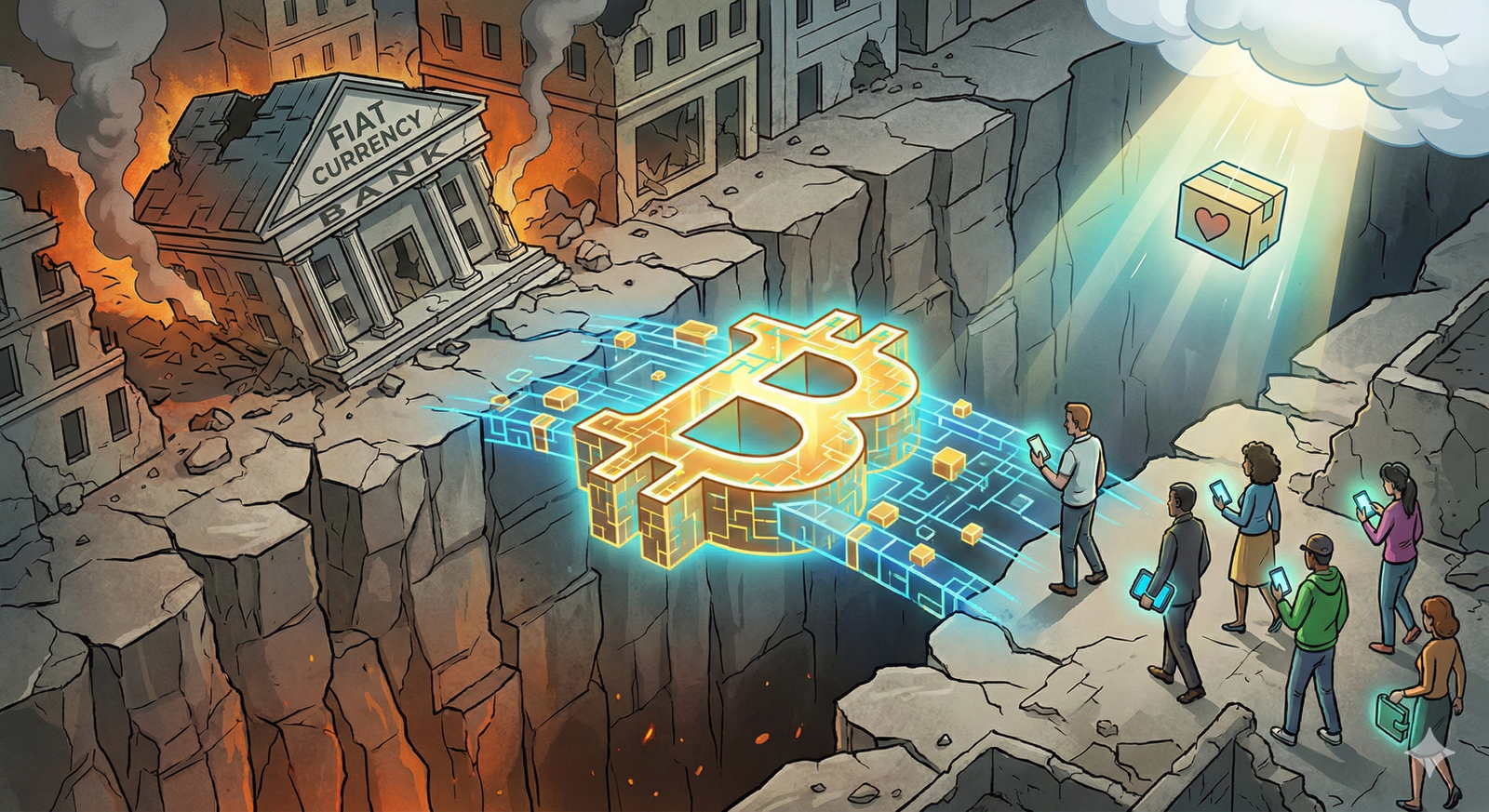
When war erupts, the physical devastation is immediate and obvious. Buildings crumble, and populations are displaced. However, a silent, equally destructive force runs parallel to the kinetic violence: economic collapse. In active conflict zones, the centralized financial infrastructure—banks, ATMs, and national currencies—are often among the first casualties.
For citizens trapped in these regions, the inability to access life savings or conduct basic transactions becomes a life-or-death issue. In recent years, a new survival mechanism has emerged from the digital realm. Moving beyond speculative trading, cryptocurrency in conflict economies has become a vital utility. It serves as a parallel financial system that is resistant to censorship, borderless, and accessible as long as there is an internet connection.
This article provides a deep dive into the practical reality of decentralized survival, examining how individuals in regions ranging from Eastern Europe to the Middle East and Africa are utilizing blockchain technology to bypass broken banking systems, protect assets from crippling inflation, and securely receive international aid.
The Collapse of Traditional Finance in Conflict Zones
To understand the necessity of crypto in a crisis, one must first understand the failure of fiat. When a government enters a prolonged conflict, its economy faces immense strain. The typical playbook involves aggressive monetary printing to fund money efforts, leading to rapid currency devaluation.
Simultaneously, governments often impose strict capital controls to prevent a “run on the banks.” Citizens may find their withdrawal limits drastically reduced, or their accounts completely frozen. Physical bank branches may be destroyed by military action or looted.
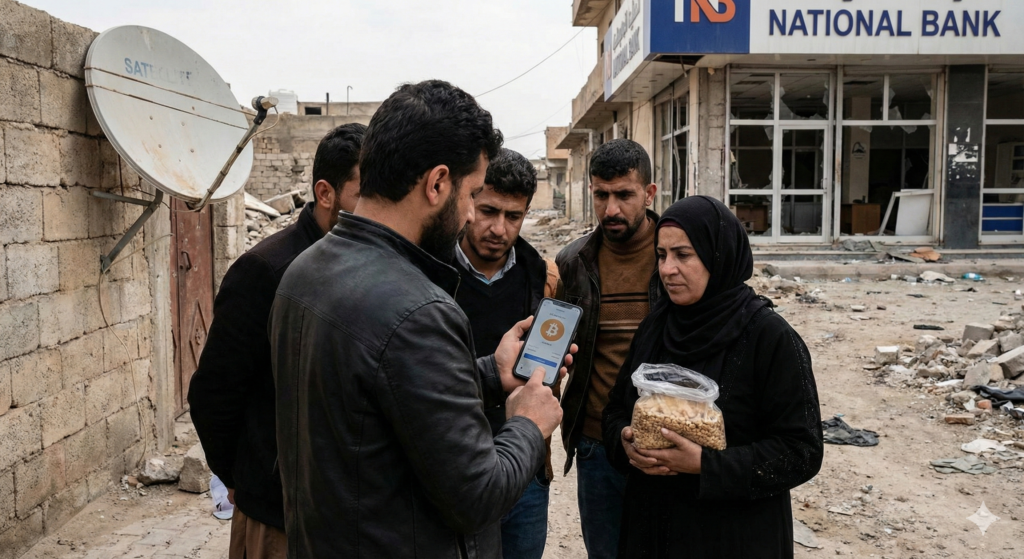
In such an environment, cash becomes both worthless and dangerous. Holding large amounts of rapidly depreciating local fiat is financial suicide, while carrying physical foreign currency (like USD or Euros) makes one a target for theft or confiscation at checkpoints. The traditional banking system, built on centralized trust and physical infrastructure, becomes utterly incapable of serving the needs of survival.
Bypassing Broken Systems with P2P and DeFi in Conflict Zones
When the front doors of the banks are boarded up, the digital backdoors of decentralized finance (DeFi) remain open. The core value proposition of blockchain technology—the ability to transfer value peer-to-peer without an intermediary—shifts from a theoretical benefit to a practical lifeline.
In many conflict regions, citizens turn to non-custodial digital wallets on their smartphones. Because these wallets do not rely on a central bank server, they cannot be frozen by a local government desperate to control capital flight.
The primary mechanism for local commerce often becomes Peer-to-Peer (P2P) exchanges. Platforms like Binance P2P, Paxful, or local Telegram groups allow individuals to trade local currency for crypto directly with other individuals. A person in a besieged city might transfer local fiat via a mobile banking app (if it still partially works) to a seller, who then releases USDT (a stablecoin) into their digital wallet. This crypto can then be used to barter for essential goods with merchants willing to accept digital payments, or cashed out in neighboring, stable countries after evacuation.
The Ultimate Hedge: Protecting Assets from Hyperinflation in Conflict regions
Perhaps the most critical role cryptocurrency plays in a conflict economy is that of a store of value. When confidence in a government evaporates, hyperinflation usually follows. We have seen this historically in Venezuela and Zimbabwe, and more recently in areas affected by prolonged instability like Sudan, Syria, and parts of Myanmar.
In these scenarios, a life’s savings held in local currency can lose half its purchasing power in a matter of weeks.
Bitcoin as “Digital Gold”
While volatile in dollar terms, Bitcoin (BTC) is often viewed in crisis zones as an escape hatch from a failing national monetary policy. Its decentralized nature means no central bank can print more of it to fund a war. Making it a hedge against the debasement of fiat currency. For refugees fleeing a war zone, memorizing a 12-word seed phrase (which grants access to their Bitcoin wallet worldwide) is safer and more portable than carrying gold bars or stacks of cash across militarized borders.
The Rise of Stablecoins
However, for day-to-day survival, Bitcoin’s volatility is a drawback. This has led to the massive adoption of Stablecoins—cryptocurrencies pegged to the value of stable assets like the US Dollar (e.g., USDT, USDC).
Stablecoins offer the best of both worlds in a crisis: the stability of a strong foreign currency combined with the speed and borderless nature of crypto. In many conflict economies, USDT has effectively become the de facto currency for significant transactions, allowing people to preserve their purchasing power against the daily erosion of their local fiat.
The New Face of Humanitarian Aid: Speed, Security, and Transparency
The utility of crypto extends beyond individual survival to reshaping how the world helps those in need. Traditional cross-border philanthropy is notoriously slow, expensive, and opaque. International bank wires to conflict zones face intense scrutiny, high fees, and days of delays. Furthermore, aid sent through traditional channels is often intercepted by corrupt officials or local warlords before it reaches the intended victims.
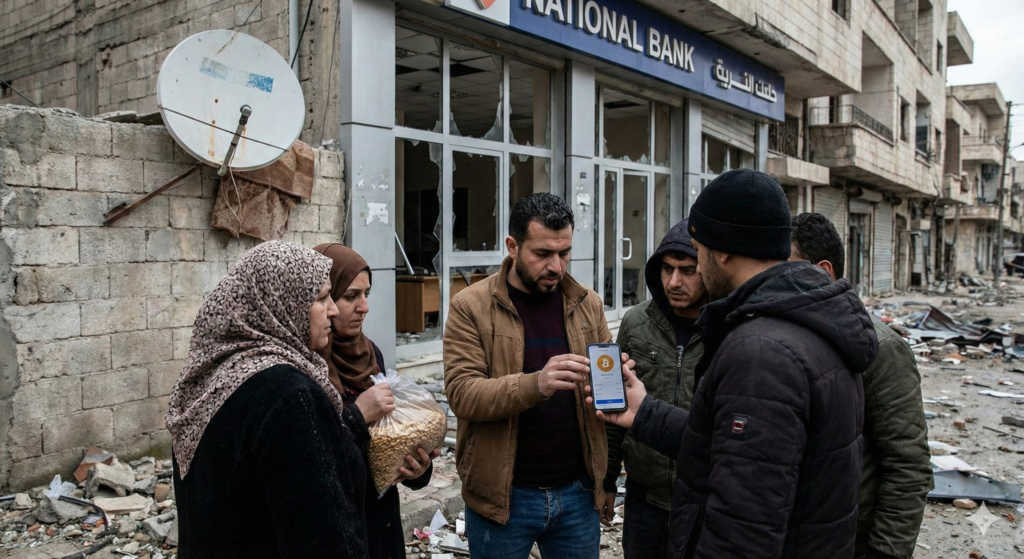
Crypto for humanitarian aid solves many of these issues:
- Speed: Funds can be transmitted from a donor in New York to a wallet in a conflict zone in minutes, 24/7.
- Direct Access: Aid can be sent directly to individuals or small, trusted local organizations, bypassing bloated bureaucratic middlemen.
- Transparency: The public nature of the blockchain allows donors to verify that funds have arrived at the intended destination wallet.
The war in Ukraine provided a watershed moment for crypto philanthropy. The Ukrainian government officially posted wallet addresses on Twitter during the initial invasion. Raising tens of millions of dollars in Bitcoin, Ethereum, and Polkadot within days. This funding was immediately usable to procure medical supplies, military gear, and humanitarian necessities when traditional supply lines were chaotic.+1
Challenges and the Digital Divide
While cryptocurrency is a powerful tool for decentralized survival, it is not a magic bullet. Its effectiveness is heavily reliant on infrastructure that war often destroys: electricity and internet connectivity. In areas under total siege with prolonged blackouts, digital assets become temporarily inaccessible.
Furthermore, there is a significant knowledge barrier. Setting up a non-custodial wallet and understanding managing private keys requires a level of digital literacy that not all populations possess, potentially leaving the most vulnerable behind.
Finally, authoritarian regimes actively try to sever these lifelines. Governments often attempt to block access to crypto exchanges, ban on-ramps, or track user activity to enforce capital controls. Creating a constant cat-and-mouse game between citizens seeking financial freedom and states seeking financial control.
Conclusion
The narrative of cryptocurrency is often dominated by price speculation and regulatory debates in developed nations. However, in the shadow of global conflicts, a different reality has taken hold. For millions living under the duress of war, economic sanctions, and monetary collapse. Crypto has transformed from a novel technology into an essential survival tool.
By enabling citizens to bypass broken banking systems, shield their wealth from hyperinflation. And receive direct international aid, cryptocurrency is providing a decentralized alternative when centralized institutions fail. As geopolitical instability continues to define the current era, the role of borderless. Censorship-resistant money in conflict economies is likely to grow even more critical.